Magazine · No. 16 · Fundación para la Confianza · October 2021
Por un Mundo sin Abuso (“For a World without Abuse”) magazine, October 2021: Teachers’ Day and the education gap
The October 2021 issue, for Teachers’ Day: the views of two students, the Foundation’s work in the secondary schools of Providencia, rural education during the pandemic, the education gap in Chile and the experience of a migrant teacher.
Teachers’ Day
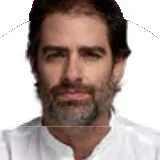
Education is in danger, and teachers have the mission of saving it. When we speak of human rights we must understand education as an experience that goes far beyond the mere transmission of knowledge. In fact, the transmission and assessment of objective knowledge should not be called education but technical training, instruction. Education is the experience of entering a shared symbolic space where the common world shows itself, is questioned, is explored. The world, in this sense, is not just a physical space where the natural plot unfolds either, but a constant relational, environmental, political urgency. It is a space under construction, destruction and reconstruction. A space in suspense.
Now, the role of the teacher is to bring students closer to this experience without anguish, unease or fear, but also without covering it up with dynamics of assessment transactions, as unfortunately happens in the classic education system. Because if the learning experience can be exchanged for a grade, an “objective” assessment means that it ceases to be a real experience and is reduced to a mere certification for the education industry. And it is here that the teacher can bring back that experience of wonder, of fascination, of community, of exploring the world.
Education, from a human rights approach, puts the experience of the human on the table, as a challenge to understand, build and defend, one that cannot be asked about in a multiple-choice test but constitutes the true challenge, not an individual one but a communal one. Precisely the teacher, who can no longer be considered a mere instrument that corroborates objective knowledge, is the guide in this challenge. A guide who is also exposed in the experience of inquiry, a human exposure which, far from demeaning him or her, dignifies the teacher and the communal educational experience itself.
José Andrés Murillo, Executive Director of the Fundación para la Confianza
What is the most significant thing a teacher has taught me?
Testimony of two students from the Santa María de la Cordillera school
Fourth-year secondary student
Teachers play a fundamental role in society, since they are the ones who educate the generations of the future. Many of them dedicate their lives and become not only exemplary teachers but also inspiring life models for the generations to come.
That is why, for me, behind all the theory I was able to learn at my school, which of course I learned and enjoyed quite a lot, are the values acquired from them. Every teacher since primary school always taught me that I have to trust myself, my qualities and abilities, I learned and was formed as a person thanks to every teacher who was with me whenever I needed them. I may forget their classes and the subject matter, but I will never forget the life lessons.
First-year secondary student
Ever since I was offered the chance to answer the question, I have been thinking the whole time about the many things I have learned, beyond the subject matter they teach. It is impressive how most of my teachers left a mark on me, but what I always highlight and remember most fondly is that a teacher was the first to use neutral pronouns with me, though she is not the only one, others also use inclusive language and others take care to give examples that go beyond the gender binary. Although there is still far too much road to travel, I always notice that they are constantly trying to give visibility to and include sexual and gender dissidence. Teachers have had an impact on my life, above all in the way they relate to me; by becoming a safe place for me as an LGBTQ+ person, they taught me to feel accepted and proud of being myself, they were always there to listen to me, even more so in situations when I did not feel comfortable.
Providencia: a municipality that adapts to the needs of its educational spaces
News from the Fundación para la Confianza · By Diana Bernal
For more than four years, the Fundación para la Confianza has worked in the municipal secondary schools of Providencia, creating training and discussion opportunities that come from our area of prevention and education on sexual abuse in school settings.
Comprehensive education is a highly relevant goal in education and is closely tied to our surroundings. That is why the Providencia Social Development Corporation decided to incorporate into the educational project of its schools topics related to sexual abuse, gender equity and sexual diversity. And in this task, teachers play a fundamental role.
In 2017, Providencia took the first step together with the Fundación para la Confianza by agreeing to establish the programme “Alianzas Para la Confianza” (Alliances for Trust), which includes a process of support and consultancy on the prevention, detection and correct handling of cases of mistreatment and sexual abuse. Under that alliance, work has been done both on the protocols of the educational establishments and on the training of their staff.
The head of the municipality’s educational communities, Monona Valdés, says that the first great change among teachers, and also among school support staff, was “becoming aware of how important it is to know each of the procedures and steps I must take when faced with a situation of rights violation”. She explains that understanding that this responsibility also involves parents and guardians was a milestone.
Along the same lines, she points out that the action protocols have been refined year after year, as communities and society change, but always including the regulations in force on this matter. Liceo 7, Liceo Carmela Carvajal de Prat and Liceo José Victorino Lastarria are some of the schools that have had the support of this programme.
After the work begun under Alianzas Para la Confianza, the Providencia education department decided to add new information and discussion opportunities, such as talks on gender and sexual diversity given by psychologists from our foundation. This was both to create a climate of respect and to attend to the students who expressed the idea of changing the historically single-sex secondary schools into mixed ones, a transition that has so far been carried out in three schools.
On the challenge for teaching staff and the other groups, Valdés emphasises that “there is a change not only from the point of view of infrastructure, but it has to do with a change of culture. Working directly with gender alone obviously has to do with breaking down certain myths or ways of working in a school”.
Likewise, the head of communities says that teachers value the support and advice on these topics which, at times, they do not command, because it has a lot to do with personal values-based formation. “It seems to me that teachers, obviously, feel more confident when facing a situation with their parents and guardians or with students”, she adds.
Valdés also highlights the role of teachers as key actors in the development of Providencia’s municipal education project, who, with the tools they have been given, can respond and educate in a new way, taking into account the changes, needs and diversity of their students.
Lastly, Valdés highlights the role of teachers as key actors in the development of Providencia’s educational project, who, with the right tools to face change in the school community, can respond to the needs of students in their diversity.
Miriam Gómez: “The lack of internet connectivity in rural areas has been opening up a large gap in education”
Interview · By Joaquín Mansilla
In our country there are 3,200 rural schools responsible for educating approximately 200,000 students. In the context of the commemoration of Teachers’ Day, it is important to hear first-hand the conditions in which teachers find themselves to do their work and meet their goals.
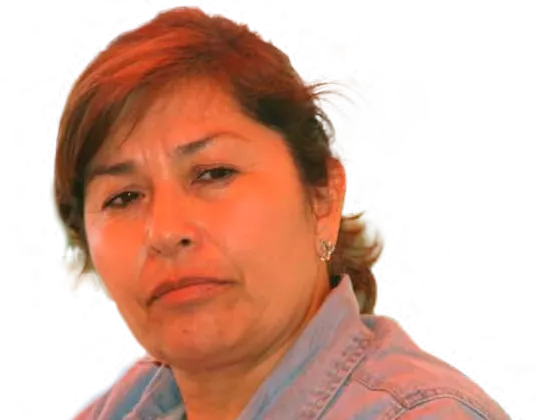
Miriam Gómez is a teacher at the Escuela Básica de Coirón (Coirón primary school) in the city of Salamanca. Since the start of the pandemic she has taught her first- and second-grade classes online. She has had to adapt to this new class format as well as take on the complexities that rural education has historically presented.
For this reason, Miriam makes a daily effort to hold their attention and build a bond despite the conditions of the pandemic. The coronavirus has forced this teacher and her family to stay at home, so being a mother, teacher and head of household in the same space has not been an easy matter to handle.
“Being a mother, teacher and head of household in the same space has not been an easy matter to handle”
One of the main problems has to do precisely with connecting to classes. “The lack of internet connectivity in rural areas has been opening up a large gap in education. Even though we teachers have taken on the task of going in person to students’ homes to deliver the content, the fact that they cannot connect to classes is something that limits them. In fact, we ourselves have paid for internet plans so that our students can access classes”, says Miriam.
Study and family
Another factor of concern for Gómez is the importance given to education in rural localities, since “many families do not allow the children to attend class regularly. They do not grasp how relevant learning at school is. Often for them the main thing is work, and sometimes the children miss class precisely because they have had to stay and help with chores at home”.
“Also, the fact that on repeated occasions we have to go to the students’ homes, either to deliver the academic content or directly to repeat the class, has created conflicts with families on more than one occasion”, says Miriam.
For that reason, the teacher maintains that “It is very important that education be considered a crucial element for facing the world, and we need both technological and infrastructure facilities to be provided. The academic results show us that, despite facing many adverse conditions, children are capable of learning and developing a wide range of skills”.
Roles and spaces
One of the most significant aspects for the teacher has been having to adapt her personal space to her work activities. Miriam emphasises that “it has been a draining period, mainly because one has to be a mum, a daughter, a housekeeper and a teacher all at once. Many times the parents and guardians themselves do not understand that and think we are available to resolve every matter 24 hours a day, seven days a week”.
Because of this combination of factors, in April this year a group of journalism students was given the task of visually documenting the challenges Miriam faces every day. We invite you to watch the short documentary called Profe...
By: Joaquín Mansilla
How did the pandemic affect the education gap in Chile?
Current affairs · By Héctor Espinoza
According to data from the Ministry of Education (Mineduc), during 2020 the education gap grew by 49% compared with previous years. The health crisis undoubtedly influenced these figures, which left even clearer evidence of the inequality that exists between students across the country.
Internet access, the possession of digital devices and the space in which each student lived through the lockdown are just some of the factors that were decisive when facing a new school year during the pandemic. Although distance education was a possibility for some, not all schools were able to hold remote classes.
- 49%increase in the education gap in 2020 compared with previous years, according to Mineduc data
- 13,723schools had to close their doors, according to Fundación Chile
- 3.7 millionstudents affected, especially from municipal schools
From Fundación Chile, its Director of Learning for the Future, Andrea Osorio, says that 13,723 schools had to close their doors. This affected about 3.7 million students, especially those from municipal schools.
For Osorio, the interruption of educational trajectories produces major setbacks, which can have different effects on students according to their age, and she explains that “A 4-year-old child today may have gone without interacting with peers since the age of two, which will weaken their social skills and their capacities for regulation and self-regulation in sharing with others. The loss of study habits and academic routines may be elements to consider as setbacks in students at higher levels”.
The lack of in-person attendance, according to Osorio, is clearly a factor that influences teaching processes, owing to the absence of spaces for interaction among students, as peers, and with teachers, stating that “This undoubtedly affected the development of skills such as autonomy, communication and collaboration, while also creating environments unsuited to learning, such as environments of fear and uncertainty”.
Given this, action by the State is absolutely necessary, and Fundación Chile believes that the way to address the post-pandemic gap, beyond remedial exercises or work on isolated subjects, is through a review of teaching methodologies. “The Chilean State has an opportunity to promote methodologies in which students take an active part, developing different products in which subjects, social knowledge and the needs of the surroundings intersect, giving meaning and relevance to the development of those products”, says the Director of Learning.
Despite the consequences the pandemic caused in the education system, Osorio values the questioning that arose regarding working methodologies and the content of classes. This, together with the consideration of wellbeing and socio-emotional development in order to achieve learning properly, are examples of a new view of teaching. “Without a doubt, it is necessary to rethink what girls, boys and young people are expected to learn, how they will learn, and in what way teaching innovation and the use of technologies will contribute to better learning that allows Chile to achieve sustainable development and the wellbeing of its inhabitants”, Osorio concludes.
Being a teacher in Chile: the conditions for teaching in our country from the experience of a Venezuelan teacher
Current affairs · By Joaquín Mansilla
In the context of the commemoration of Teachers’ Day, the Fundación para la Confianza had the pleasure of speaking with Ruth Castillo (32), a Venezuelan Chemistry teacher at the Chilean Eagles College in Las Vizcachas. In this interview, Ruth shared with us both her experiences working as a teacher in Chile and those of her colleagues.
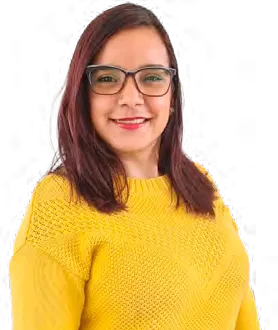
Recent events affecting people in a situation of migration in Chile could lead us to conclude prematurely that any testimony would consist of experiences of discrimination and racism. For the migration crisis has produced arbitrary actions by the Chilean public that unfortunately show a significant step backwards in cultural coexistence.
That is why the experience of Ruth Castillo as a teacher at the Eagles College in Las Vizcachas is striking and motivating. In this interview the teacher tells us how the educational community in which she works has welcomed her in the best possible way.
Waiting to practise
“What is mainly needed to practise in Chile is to have your qualification recognised and a permanent visa. That process usually takes 18 months. Add to this the process of looking and applying for a job, and foreign teachers in Chile easily take up to three years before they can work without any problem. I must admit that I was lucky and that my experience was far from those barriers, but not because I was able to speed up the paperwork; rather, the school itself gave me the opportunity to work in parallel while my papers were being regularised”, says Ruth.
“I know radically different experiences among colleagues, that is, some have found work quickly and smoothly, while others have been waiting more than a year and a half to practise.” In this way, Castillo emphasises that the working conditions of migrant teaching staff in Chile depend considerably on the will of each school management, which reveals a significant lack of protection on the part of government institutions.
Teaching and growing in Chile
Ruth tells us with pleasure about her experiences of the treatment she has received from Chilean women and men during her four years in our country. She tells us of the warm welcome she has received from her colleagues and managers, as well as from the students, who, beyond asking her every five minutes the meaning of some Venezuelan term, have not witnessed, nor has she been exposed to, any case of arbitrary treatment.
“I am very happy to be at the school. I have certainly been allowed to grow and develop professionally. Every opportunity the school provides, for the sake of professional strengthening, is a benefit for the careers of those of us who, like me, are once again building networks and reinforcing our credentials as teachers.
I consider it important to highlight this because, although it has not been my experience, I do know other colleagues in other schools who have lived through situations in which their integration or recognition as specialists has been more complex”.
All the same, Ruth tells us that, if she had to choose between working in Chile or Venezuela, she would choose Chile because of the level of demand and the competences that are developed in our country. “The only thing that has taken me a little getting used to is the administrative and structural functioning of the system: in Chilean schools a teacher has to record everything, from attendance to grades in the class register, and that was a surprise at first. All the same, I think the level of education is positive. At least I have not seen differences in content between a subsidised school and a private one”, she concludes.
How to cope with online education?
Tips · Línea Libre (the Foundation’s helpline for children and young people)
- Adapt to technology and develop creativity
- Bear in mind that, beyond the conditions, what matters is that students learn
- Organise your time and let all your contacts know your schedule
- Set defined moments to relax and switch off for a while
- Understand that this is also a learning process for teachers
- Above all, ask for help when you are overloaded and need it
About this edition. Web version of Por un Mundo sin Abuso magazine, No. 16 (October 2021), published as a PDF in Spanish by the Fundación para la Confianza, with typographical errors corrected and new graphics summarising the content. Figures are as of the date of the magazine. The Línea Libre mentioned in this issue is now suspended. The students’ names were removed from the testimony. Download the original PDF (in Spanish)
Editorial team. José Andrés Murillo, director. Verónica Uzcátegui, editor-in-chief. Diana Bernal, Joaquín Mansilla and Héctor Espinoza, contributors. Cristhian Sotomayor, graphic design and layout.
Translation by Fundación Para la Confianza. In case of any difference, the Spanish version prevails. Spanish version.