Magazine · No. 11 · Fundación para la Confianza · April 2021
Por un Mundo sin Abuso (“For a World without Abuse”) magazine · April 2021: World Day against Child Slavery
The April 2021 issue, for the World Day against Child Slavery (16 April): an editorial on the abuse of power, testimonies from people who used Línea Libre, figures on child labour and commercial sexual exploitation, an interview on mental health, and tips for seeking psychological support.
Abuse of power
If we were to gather all the children and adolescents who are living in slavery in the world today, in the full swing of the 21st century, we would fill the whole Santiago Metropolitan Region, Valparaíso, Viña and Greater Concepción. Yes, child slavery exists in 2021. And although the real figures are not known, various global human rights organisations estimate that at least 10 million children and adolescents are currently victims of slavery. Child soldiers, children sexually exploited, working in mines or in private homes, carrying drugs, or other forms of slavery. Also being sold for these purposes. Our power of denial is so great that we prefer not to see this reality, but not seeing does not make reality disappear; on the contrary, it sharpens it, gives it greater power and leaves us more unprotected in the face of it.
The power of adults over children is so great, the structural asymmetry that exists is so great, that we can witness the greatest brutality, as with sexual, psychological, physical and political abuse. Indeed, all child abuse is always an abuse of power, because it is power that is used to do harm. Power has so often been abusive that we forget that its authentic principle is care. Power arises in the asymmetry that calls for protection, listening, care. Childhood is also an asymmetry, and as humanity we need to understand this asymmetry from the standpoint of care. Otherwise, we will go on normalising existing and unacceptable situations, such as slavery, and also child abuse in all its expressions.
Valentina Correa, acting director of the Fundación para la Confianza
Testimonies
Messages from people who have turned to the Foundation’s support channels
Mental health is very important and must be looked after. We share testimonies from some of the people who have turned to our support channels.
“Thank you so much, it made me feel good to be listened to. You listened to me the way I wanted, and that was important to me”.
“Thank you so much for your time, it has been brief, but you don’t know how much it has helped me, at least to know that someone is reading me”.
“thank you so much, please always keep doing this”
“how much fun, thank you so much for listening to me, I loved it, it’s the best app I’ve used in my whole life!!!! thank you, thank you, thank you”
“thank you so much, take good care and eat well <3”
“thank you so much, you don’t know how much I value that you listened to me, that you understood me and didn’t judge me”
“thank you so much, have a really good day, and a really good 2021. I’m so grateful to you. You can’t even begin to imagine how much”
“thank you so much for listening, I feel that we all need this kind of support at some point in life. You do it for free, which for those of us who don’t have much money, or who feel awkward about having to ask for help, is very rewarding. I hope everything good that you do comes back to you <3”
“this space is great :), I’m going to tell other young people about it”
“a hug to you too, really, whoever is behind this screen. Thank you so much and rest well, tomorrow will be another day, hugs and take care!”
Línea Libre: we are here to listen to you
News from the Fundación para la Confianza · By Ignacio Flores
Aimed at children and young people up to the age of 29, this channel began as a project of the Fundación para la Confianza together with the Ministry of Social Development and Family and the municipalities of Las Condes and Providencia. It is coordinated by professional psychologists trained to provide emotional support, guidance and ethical intervention in moments of crisis. Diego Riveros, coordinator of Línea Libre, says: “For me, working at Línea Libre has become a unique experience for encouraging opportunities for child and youth participation, for gaining access to different experiences and for hearing the many accounts of children and adolescents.”
The platform has three ways of making contact: a telephone number (1515), an app available for Android and iOS, and its own website, www.linealibre.cl. There have already been many contacts, more than 10,000 consultations, and they have produced data worth analysing.
- 10,000+Línea Libre consultations
- 81.2%of users are women
- 51.9%of contacts are from Santiago
On the one hand, most users are women: 81.2% of the total. On this figure Riveros says: “In general, the concept of emotional wellbeing is not unconnected to the gender differences that socially and culturally influence these dimensions. Functions such as care, emotional wellbeing and self-care are unfortunately associated with the female gender.” Riveros adds that another important factor is that women are the ones who systematically suffer situations of gender and sexual violence.
A significant fact is that a little over half of the contacts (51.9%) are from Santiago. According to the coordinator, this is explained by the fact that Línea Libre’s outreach campaigns have been carried out mainly in the Metropolitan Region, since its base is in Santiago. Riveros says: “This is a factor we have to consider in our analyses, and we have to make an effort to reach other regions, bearing in mind the characteristics of our service, that is, that it is free, confidential and accessible to people who are in Chile.”
Riveros explains that reaching a wider public is an aim for 2021; the main goal would be to extend the reach of Línea Libre, and to that end one of the actions is to make this project known among children, young people and people in other regions, and one of the keys is a presence on social media. He says: “We know this is one of Línea Libre’s objectives for 2021. Last year was an important year for the team: we were able to consolidate our service model and achieve greater recognition, both in the coordination of networks and among the public we serve.”
Looking back at what it meant to work in a completely new context, the still ongoing Covid-19 pandemic, Riveros says: “Last year’s experience has taught us a great deal, above all from the work of a psychological helpline. Remote service can be a way of democratising mental health in our country, where there are very large gaps in access to adequate psychiatric or psychological treatment.”
Finally, Riveros analyses all of this and states that the experience of the pandemic is reflected in the figures, since, being remote, the service has been the first and only opportunity some people have had to talk about what they feel.
Ignacio Flores
16 April: World Day against Child Slavery
Current affairs · By Carolina Castro
UNICEF Chile considers child labour to be any work activity, paid or unpaid, carried out by children under 15 that hinders their regular education or affects their health and overall development. The vulnerability of children and their great dependence on adults leave them exposed to the possibility of being exploited or enslaved.
In Chile it is estimated that around 240,000 children and adolescents work. Of this number, 42,000 children and adolescents spend more than half a working day (21 hours or more) on domestic activities. Of these, 85% are girls and young women (First national survey of child and adolescent labour, ILO and Ministry of Labour, 2003). These figures should raise alarms in every sector: children and adolescents are devoting extreme hours to work, which goes against their best interests and, in some cases, exceeds the international and national rules that regulate employment relationships.
In 2017 in Chile more than 219,000 children and adolescents were working. It is important to stress that Chilean law prohibits child labour for those under 15 and provides that between the ages of 15 and 18 they may work, provided that they have legal authorisation, their studies are not interrupted and they are not exposed to dangerous tasks.
According to the law, in no case may people under 18 do work that requires excessive force or is dangerous to their health, safety or morals. It is estimated that around 197,000 children and adolescents do dangerous or risky work (Ministry of Labour, 2017).
- 240,000children and adolescents work in Chile, according to estimates
- 42,000spend more than half a working day (21 hours or more) on domestic activities; 85% are girls and young women
- 197,000do dangerous or risky work (Ministry of Labour, 2017)
- 219,000children and adolescents were working in Chile in 2017
- 3,719children or adolescents, at least, involved in commercial sexual exploitation in Chile, according to one estimate
- 15 to 18years: the ages between which Chilean law allows work, with legal authorisation, without interrupting studies and without dangerous tasks
The commercial sexual exploitation of children and adolescents is considered a form of modern slavery. In Chile, however, it is not defined as an offence in law, even though it is a reality.
The commercial sexual exploitation of children or adolescents is defined by the International Labour Organization as the use of a person under 18 in sexual activities, under the promise of financial reward (in payment or in kind), or even under threats. For the Fundación para la Confianza and for most of the organisations dedicated to this issue, the commercial sexual exploitation of children and adolescents should not be considered a form of work, and therefore the ILO should not be the body that regulates it or lays down actions in this area.
Commercial sexual exploitation is a severe violation of the human rights of people under 18, and corresponds to a form of economic exploitation comparable to slavery and forced labour.
An estimate made in Chile indicates that at least 3,719 children or adolescents are involved in this grave violation of human rights. It is important to create spaces for continuous reflection on practices and findings, since this allows those who implement social policies to take effective part in designing and reformulating them, creating spaces of visibility where this can be penalised and where it is not only a matter of adhering to international commitments, but of having something formal through which regulation can be made in favour of the rights of children and adolescents.
Carolina Castro
Preventing child slavery: opening spaces for conversation and recognising the problem
Current affairs · By Marcela Valdebenito
Slavery is a concept that seems foreign to our reality. Yet it persists in Chile and throughout the world, affecting a large part of the population, mainly the children and adolescents who are often made invisible and whose rights are violated. That is why it is important to recognise this issue and raise awareness of it, in order to prevent this reality from continuing to happen.
Every 16 April the Day against Child Slavery is commemorated, following the murder of Iqbal Masih, a Pakistani boy who became a symbol of the fight against child slavery, of which he was a victim. He was sold by his father at the age of four to a carpet factory where he worked twelve hours a day. He managed to escape and became an activist for the rights of children. However, he was murdered at the age of twelve while riding his bicycle.
Iqbal’s story made visible a reality lived by many children around the world. It is a reality that is often invisible because the word “slavery” is believed to have been eradicated. Yet according to a report by the World Organisation of Workers, it is estimated that 218 million children take part in economic production worldwide. More than half are victims of child labour considered to be slavery, a worrying situation.
Therefore, to prevent child labour “it is necessary to raise awareness in communities and among people about the rights of children and adolescents, to establish that they are subjects of rights and, above all, to eliminate those social norms that normalise or make this practice invisible”, explains Carolina Castro, a psychologist at the Fundación para la Confianza. She also adds that “educational means and spaces should be promoted for training on these issues, both for children and adolescents and their families, and for police and judicial bodies, encouraging them to become involved in the oversight, detection and eradication of child labour”.
However, child labour is only one of the many modern forms of child slavery. The commercial sexual exploitation of children and adolescents (ESCNNA, from its Spanish initials) is another example of modern slavery. In Chile, however, it is not defined as an offence in law, even though it is a reality. This is explained mainly “because there is a lack of knowledge of how sexual exploitation operates, as well as the invisibility of the traumatic experiences of victims of exploitation and the naturalisation of these practices”, the psychologist explains.
One way of preventing commercial sexual exploitation “is to open spaces for conversation on these issues, and to do State work centred on the person who commits the abuse, making clear that it is an offence, and not centred on punishing children and adolescents”, Carolina proposes. She also adds the importance of not naturalising this reality and of remembering that when an adult uses a person under 18 for sexual purposes, they are committing an offence. It is therefore necessary to carry out awareness-raising work, since even if the legislation is brought into line, without the response of an environment that reacts to and reports these offences, its effect is lost entirely.
Marcela Valdebenito
Mental health challenges in Chile
Current affairs · PUMSA in conversation with Josefina Huneeus, mental health coordinator of the Colegio Médico (Chilean Medical Association)
One of the important focuses that has emerged over the last decade is mental health, a branch of health historically ignored by society. Today this picture has changed, but we still have a long way to go. It is in this context that the doctor and mental health coordinator of the Colegio Médico, Josefina Huneeus, spoke with PUMSA.
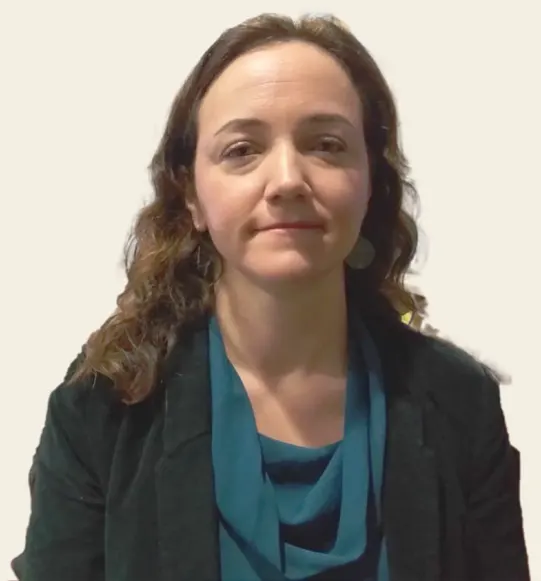
The doctor says that, first, we need to talk about awareness and the relevance mental health has for physical health, even in people’s day-to-day lives. She adds that in Chile we have been making progress, and that last year, because of the pandemic, we were able to see the importance of mental health, since we began to be affected by confinement. For Huneeus this sped up the process of becoming aware; she nevertheless maintains that there is still much to learn about what mental health involves and to understand that “it is an area of health that has characteristics very similar to physical health and that has historically carried a great deal of social stigma and discrimination”, the doctor defines.
Huneeus comments on the prejudices that still exist today around mental health: “I think the most widespread one is that this (mental health) is an invention, that mental illnesses do not exist, that it has to do with attitude, that the depressed person is lazy, that the person with schizophrenia is mad, that the person who dies by suicide is a coward, and a whole lot of labels that we have because illnesses of the mind cannot be seen physically, like a fractured bone”. The doctor considers that these beliefs can be seen in everyday life, for example in politics or in the language that all of us use. Another stigma we have is that people with mental health conditions are weak, linked to the feeling of letting down the people around you.
“There is also the gender stigma, of the crazy “chick” (“mina”). There are several prejudices associated with women, for example, that the woman who expresses herself emotionally or cries is a hysterical “chick”; I want to think, or to see, that this has been improving”, Huneeus states.
The coordinator of the Colmed’s mental health area believes that greater understanding and emotional awareness are needed not only in health in general, but that an important space that requires special attention is education. She says: “Schools, for children whose basic needs are met and whose rights are guaranteed, are places of learning and socialisation, where there can be a great deal of learning that is not only academic but also socio-emotional and in other elements of life; but in the most vulnerable sectors, which are the majority of the country, schools can become the only protective space for children”.
On the role the State has played in promoting and ensuring mental health, Josefina Huneeus says: “To be honest, I think mental health is the poor relation of health in Chile, in terms of priority and budgets. A little over 2% of the health budget goes to mental health; one could say that only now, as a result of the creation of the “Saludablemente” programme and the measures that have been slowly implemented, is there some concern on the part of the executive.”
As a general analysis, Huneeus says: “We have a social, cultural and economic model that makes people ill; it is very competitive, very demanding. People are forced to perform, to keep up appearances, to show and to have, with a very marked individualism, and that also affects mental health, with a great deal of inequality and great difficulty, for most people, in gaining access to a good quality of life.”
When to seek psychological support
Tips · Línea Libre (the Foundation’s helpline for children and young people)
- When a worry has no solutionThere are often things that worry us. However, when there is a bigger worry, you cannot find the solution and you feel overwhelmed, and your daily activities (eating, resting, sleeping) are affected, you can ask a psychologist for guidance.
- When your emotions affect your bodyIf your emotions affect your body, it is also good to seek support. Sweaty hands, pains in the chest or stomach, and crises you cannot control are some of the bodily signs that something is affecting you.
- When relationships with other people are a problemWhen the relationships we build with other people become a problem or make you feel uncomfortable for different reasons, that can also be a reason to talk to a psychologist.
- When your relationship with yourself is a problemWhen the way you relate to yourself becomes a problem. For example, if you are very demanding of yourself or have negative thoughts about yourself. It is important to look after our mental health, so asking a psychologist for support will be good for you and for those around you.
Remember that if you are a child or adolescent and need more guidance on this or other subjects, you can talk to a Línea Libre psychologist, confidentially and free of charge, from Monday to Saturday between 10:00 and 22:00. Get in touch by downloading the Línea Libre app, calling 1515 or visiting www.linealibre.cl.
About this edition. Web version of Por un Mundo sin Abuso magazine, No. 11 (April 2021), published as a PDF in Spanish by the Fundación para la Confianza, with typographical errors corrected and new graphics summarising the content. Figures and legal references are as of the date of the magazine. The Línea Libre mentioned in this issue is currently suspended. Download the original PDF (in Spanish)
Editorial team. Valentina Correa, acting director. Verónica Uzcátegui, editor-in-chief. Nicole del Río, Ignacio Flores, Carolina Castro, Marcela Valdebenito and Josefina Huneeus, contributors. Cristhian Sotomayor, graphic design, illustration and layout. Address: José Ramón Gutiérrez 269, Santiago. Email: contacto@paralaconfianza.com. Telephone: 56 9 62272718.
Translation by Fundación Para la Confianza. In case of any difference, the Spanish version prevails. Spanish version.