Magazine · August 2021 · No. 14 · Fundación para la Confianza
Por un Mundo sin Abuso (“For a World without Abuse”) magazine · August 2021: Spaces for the participation of children and adolescents
The August 2021 issue, for Children’s Day: the Constitution and the children’s rights approach, the dreams of fifth-grade students, Línea Libre, an interview with Cecilia Domínguez, technology in SENAME centres, progressive autonomy, and tips for encouraging participation at home.
The Constitutional Convention and a rights-based approach to children and adolescents
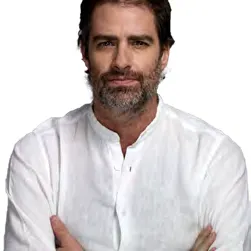
The Constitutional Convention has been at work for more than a month and its challenge remains enormous. Our expectations of a constitution with a children’s rights approach are the least we can expect. But what does this mean?
In these more than ten years of working with people who suffered serious violations of their rights during childhood and adolescence, we have seen the same thing that research on early adversity and trauma has been showing for some time: what is lived in the first years of life is decisive for life development[^1]. And not only consequences for mental health, but also for physical health, behaviour, legal matters, work, family and finances. It is the whole of society that suffers the consequences of what a child has lived through in childhood. It is not a private matter but a public one of the highest national interest. The present and the future of a country depend to a large extent on the well-being of the children in it. And this well-being is not necessarily a natural state but the result of building an enabling, healthy, integrating environment, the product of a clear approach and will. What happens in the constitutional debate is relevant here. We have seen the Constitutional Court issue rulings that go against the children’s rights approach precisely because the current 1980 Constitution lacks that approach.
And what, then, do we expect?
First, a Constitution that declares, symbolically and materially, a children’s rights approach as recognised in the Convention on the Rights of the Child (1989). As a consequence of this approach, the absolute priority of children must become a criterion for the country’s political, administrative and budgetary decisions. All the legislative and organisational development will depend on this approach and priority, so that the right context is genuinely created for the comprehensive well-being of children and adolescents. Because the comprehensive well-being of the whole country, in the present and in the future, depends on that well-being.
José Andrés Murillo, Executive Director of the Fundación para la Confianza
[^1]: Robert Waite and Ruth Ann Ryan: Adverse Childhood Experiences. What students and health professionals need to know. Routledge, NY, 2020.
What is your dream for all children?
Testimony of two fifth-grade students (5th A) at the Mercedes Marín del Solar school
Fifth-grade student (5th A)
A world with more respect and equality, where it does not matter what social class, nationality or skin colour you have, or whether you see things differently, because in the end we are all equal and nobody is more or less than anyone else. A world with no injustice, where people put themselves in each other’s place. And lastly, a world where people are more grateful for what they have and where there is no envy or resentment. We can all do our bit so that we have the same opportunities to have a dignified life and simply to enjoy it without fear or worries.
Thank you very much for inviting me to be part of the magazine.
Fifth-grade student (5th A)
Hello, I study at the Mercedes Marín del Solar school in 5th A. I am going to tell you what my dreams are for us children. My dreams for the children of the world are: that children respect each other regardless of any diversity, that children do not suffer bullying (and do not do it either), that they are empathetic and supportive, that they respect their rights, that they have a place to live, food to eat, that they are kind to others, that they have a quality education, that they can express themselves freely and that they are happy with their families.
And I am very grateful for the opportunity to write in the magazine.
Línea Libre: the emotional well-being of children and young people does matter
News from the Fundación para la Confianza · By Diana Bernal Allendes
What happens in the world also affects children and young people. That is why the Fundación para la Confianza offers free psychological care for children and adolescents through the Línea Libre project (the Foundation’s helpline for children and young people). This care is free of charge and aims to ensure the right of children and adolescents to participate and to health.
Promoting the rights of children and young people is a very important mission for the Fundación para la Confianza. That is why in 2019 it decided to reopen Línea Libre, a free and confidential psychological guidance channel that had been run by the ANAR Foundation for four years but had to close in 2017 for lack of resources.
Currently, there are many calls and messages through which children and adolescents ask the professional team for support. The Línea Libre psychologist and coordinator of remote care, Diego Riveros, says that the contacts range in age from 10 to 18, but with greater frequency among adolescents aged 15 to 18.
- Ages 10 to 18age range of the contacts; most often 15 to 18
- 68%prefer to communicate through the chat in the Línea Libre app
- 15%choose a telephone call
- 5%opt for email
He also reports that more than 68% of users prefer to communicate through the chat in the Línea Libre app, a preference attributed to the privacy and immediacy of that channel, but also “to the kind of experience that adolescents and children have with the online world, which lets them be doing other activities at the same time”. Meanwhile, 15% choose a telephone call and the remaining 5% opt for email.
Riveros comments that “the main reasons for contact relate to mental health issues such as anxiety, distress and suicidal ideation”; and in many cases they are closely linked to what is happening in the country. This was evident during the turbulent context of the social crisis of October 2019 and, more recently, with the pandemic and the health restrictions.
The uncertainty brought by the start of the pandemic and the lockdown, together with the fear that a relative would catch covid-19, were notable concerns in the conversations with the Línea Libre professionals. The distancing measures that limited social relationships may have affected the emotional well-being of small children and the process of identity formation in the case of young people.
“All of this added up to children and adolescents getting in touch with us, and it directly affected their emotional experience”, the psychologist says. He adds that the adult world tends to downplay what may be happening to them, especially in the emotional sphere.
Discourses that link their sensations and feelings to a transitory phenomenon belonging to their age, or that voice prejudices and value judgements in phrases such as “you’re exaggerating, don’t be so dramatic”, become clearly visible when a child or young person says they want to see a psychologist, because they are told that they do not need professional help or that it will not be of use to them.
On this point, Riveros emphasises that it is necessary to have settings in which they can be heard and exercise their voice, as Línea Libre is, where they themselves build their possibilities for action, taking direct part in the matters they consider important.
Línea Libre is a care space staffed by psychologists, in which the well-being of children and young people is paramount. Opening hours are Monday to Saturday, 10:00 to 20:00. You can get in touch free of charge and securely by calling 1515, through the Línea Libre app, available for Android mobile devices on Google Play and for iOS on the App Store, or through the contact form on the website www.linealibre.cl.
Cecilia Domínguez: “The participation of children is the engine of social change in Chile”
Interview · By Daisy Seguel
The Law academic at the Universidad de Chile and researcher at the same faculty talks to us about the importance of opening spaces for participation and listening for children and adolescents, and about the responsibility of adults in making this task possible in order to build civic responsibility.
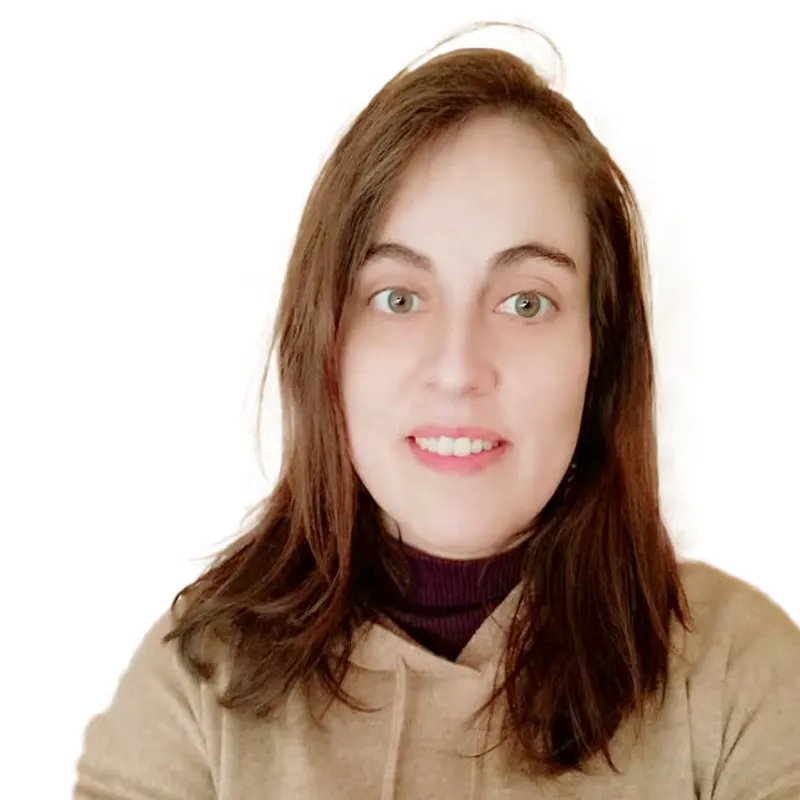
In Chile, the social uprising (estallido social) was one of the movements that marked the country’s history, and it is one of the many demonstrations that began thanks to the mobilisation of school students, culminating in the constituent process we are living through today. Despite this, the importance of the participation of girls, boys and adolescents outside the more conventional spaces is still a subject that is often debated.
For Cecilia Domínguez, a professor at the Universidad de Chile and part of the Asociación Chilena Pro Naciones Unidas (ACHNU, the Chilean Association for the United Nations), it is important to stress that this phenomenon has many causes. One of the aspects is the adult-centred view marked by the legal system, which is why she explains that “Children cannot act on their own, they act through representatives in civil life. I think there is a culture that treats them as incomplete and as waiting to mature”.
Understanding participation as the exercise of a right is another important factor in this discussion, since, as Domínguez points out, it allows the comprehensive development of children, and not encouraging it has consequences. “In some way it affects us, we can see it in the children who finish fourth year of secondary school, many of whom have not made a single decision in their lives, and then from one minute to the next we ask them to behave like adults and they have no tools”, she clarifies.
According to Domínguez, participation at an early age is the beginning of how we build citizenship, not only from a political point of view but in all the matters that concern children. On this she clarifies that “When children are already able to express wishes and preferences, we adults must create the conditions to read that and make decisions. It is the only way for them to connect with the world and also to take responsibility for their decisions”.
“This has nothing to do with children doing whatever they feel like, whenever they feel like it, and deciding their lives on their own. No, this is about ultra-present parents creating conditions.” Cecilia Domínguez
This clearly poses a challenge and a great effort for adults, since they did not experience participation in their own childhood either, so it is common for them not to know how to create those conditions. “Just because we were children and adolescents does not mean we know the worldview that children have today, we have no idea, and we lose all that cultural heritage, society loses a part of its self-vision”, Domínguez says.
One of the most important changes needed to move forward on this, according to Domínguez, is to change the education system, which she believes has almost no participation in which students can reflect and develop critical thinking. She also speaks about the role played by the duty-bearers, parents, in creating these spaces, understanding the difference between participation and neglect, maintaining that “This has nothing to do with children doing whatever they feel like, whenever they feel like it, and deciding their lives on their own. No, this is about ultra-present parents creating conditions”.
Finally, Domínguez states that to foster all this it is necessary to have a public policy that requires spaces for participation, but that the starting point of the conversation is for the State to understand that when it speaks of human rights it is also speaking of children.
Worrying lack of access to technology in SENAME centres
Current affairs · By Diana Bernal Allendes
The coordinator of the Observatorio Para la Confianza (the Foundation’s observatory), Sofía Aliaga, states that the problem of limited access to technology in SENAME centres “is one more to add to the list of the historic neglect the State has shown towards the children under its protection”.
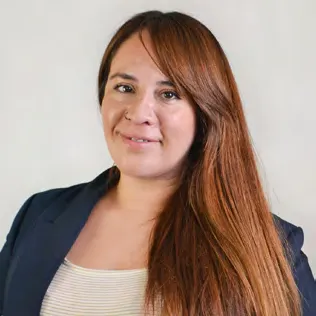
Since the start of the covid-19 pandemic, a new weakness has been exposed in the Servicio Nacional de Menores (SENAME, Chile’s national child protection service). This time it was the limited access to technology for children and adolescents, who need it to communicate with their families and to continue their schooling online, because of the health measures that restricted in-person activities.
Although the institution believes that access to technology allows children to develop their potential and grow with equal opportunities, it also acknowledges that it has a lot to work on. For the availability of technological tools is, most of the time, not in line with the number of children who need them.
The coordinator of the Observatorio Para la Confianza, Sofía Aliaga, says that SENAME informed them in a consultation that the family residences in Quillota and Villa Alemana had no equipment at all (mobile phone, tablet or computer) last year. Meanwhile, at the Entre Silos protection centre in Talca there are 14 children per device, a situation that is repeated on a smaller scale in other facilities.
- No equipmentin the family residences in Quillota and Villa Alemana during the previous year
- 14 children per deviceat the Entre Silos protection centre in Talca
Few of the centres run directly by SENAME have a technological device for every child; one of them is the Coyhaique residence. According to Aliaga, this picture does not come as a surprise since “in SENAME there are generally plenty of problems, this is one more to add to the list of the historic neglect the State has shown towards the children under its protection”.
It is a cause for concern, though, because “these children and adolescents who are in these processes of family reunification need to keep fluid and constant contact with the family in order to feel part of it and to repair in some way the emotional harm they may have”. In addition, the coordinator of the Observatorio Para la Confianza points out that sometimes it is the direct-care educators who lend the children their personal mobile phones so that they can contact their families.
As for education, Aliaga points out that the lack of equipment “indicates that the school year at SENAME in 2020 in those residences was probably not adequate or what was expected”. She adds that “the fact that access to technology is not so easy for SENAME children may mean that this later results in a digital divide”, which would be added to the educational gap they already have.
“SENAME should provide equipment, let the children explore this equipment, run workshops, and so on, so that they are prepared to go out into a world that is run by technology”, she concludes.
What is progressive autonomy and why does it cause conflict?
Current affairs · By Héctor Espinoza
It is one of the principles enshrined in the Bill on Guarantees and Comprehensive Protection of the Rights of Children and Adolescents, which the governing coalition used to bring a challenge before the Constitutional Court. The legislative proposal also received a veto from President Sebastián Piñera, which the Chamber of Deputies rejected.
According to the Office of the Children’s Ombudsperson (Defensoría de la Niñez), progressive autonomy is “the capacity of children and adolescents to exercise their rights as they develop physically and mentally”. This is understood as a gradual process which, at the outset, needs the presence of an adult who ensures the guarantee of their rights.
Despite being recognised in the Convention on the Rights of the Child, ratified by Chile in 1990, it has been a concept questioned by the most conservative blocs in the country, delaying the enactment of a guarantees law, which has already been under legislative discussion for six years.
The Foundation’s lawyer, Elvira Vergara, explains the importance of progressive autonomy in children’s development, above all with regard to the power to decide about their rights, and clarifies: “This autonomy provides a framework within parental relationships, since on the one hand it operates as a limit on the authority of fathers or mothers, and on the other it reinforces the idea that children and adolescents are rights holders distinct from their parents, with their best interests being taken into consideration”.
According to Vergara, it is sometimes believed that bringing progressive autonomy into the discussion on children’s rights curtails the rights of parents; on this she explains: “there are those who consider that there is an antithesis between progressive autonomy and the parents’ preferential duty to educate their children, which is not so, since they are closely linked. For a child to develop optimally and with gradual independence, the guidance and support of their parents or carers is fundamental, and the Guarantees Law provides for exactly that”.
The Foundation’s lawyer also points out that there is a notable paradox in the legislation regarding the rights and responsibilities that children and adolescents can currently acquire. On this Vergara states: “They have sufficient maturity to be subject to the adolescent criminal responsibility regime, labour law allows them to be party to an employment relationship and civil law allows them to administer their own earnings from work (peculio industrial), but there is resistance to allowing them to exercise rights, limiting their progressive autonomy”.
- To be subject to the adolescent criminal responsibility regime
- To be party to an employment relationship
- To administer their own earnings from work (peculio industrial)
- Allowing them to exercise rights, limiting their progressive autonomy
Vergara also emphasises the need to recognise the political role that children play in society, maintaining that “We are used to speaking and deciding for children, as power groups have generally done with oppressed groups, so recognising this principle will allow us to move towards a mutual recognition in which we adults also learn from children, and in which we are able to listen to and include their opinion, through respectful dialogue”.
Lastly, Vergara refers to the urgency of establishing a guarantees law in Chile in order to build public policies with a comprehensive and cross-cutting approach from the standpoint of children, and in response to the governing coalition’s challenge she concludes: “Unfortunately, the Constitutional Court upheld the challenge of a group of members of parliament and declared some aspects of the concept of progressive autonomy unconstitutional even though it had been extensively discussed by the legislature. This motivates us to keep working for the full recognition of the rights of children and adolescents”.
How can we encourage the participation of girls, boys and adolescents at home?
Tips · Línea Libre (the Foundation’s helpline for children and young people)
- Accept that the arrival of girls and boys in the home means changes in our way of lifeAs adults we must be willing to negotiate over how we build our spaces. Girls and boys are at different stages of development and their needs for living together are different.
- Observe girls and boys in the earliest stage of childhoodWe have to be able to observe what makes sense to girls and boys and what does not. Tantrums are great moments of children’s participation and have to do with things that are not working for them in life at home.
- Build spaces for listeningWhen girls and boys know there are moments when they will be listened to, they usually wait for those moments to say what they want to say; however, when they believe they are never listened to and have to shout loudly to be heard, that is what they will do.
- Hold participation tablesThese are settings created whenever they are needed and have to do with family decision-making. They are crucial for children’s participation, and the more formalised they are, the easier it is to build fluid participation, since children know when they will be listened to.
- There are no better negotiators than childrenOften as adults we have commitments, and it is fine for girls and boys to have to fit in with them, but it is crucial to have a conversation to explain why decisions are made. This develops another space for building better conditions in the environment of girls and boys.
About this edition. Web version of Por un Mundo sin Abuso magazine No. 14 (August 2021), published as a PDF in Spanish by the Fundación para la Confianza, with typographical errors corrected and new graphics summarising the content. Figures and legal references are as of the date of the magazine. The Línea Libre (the Foundation’s helpline for children and young people) mentioned in this issue is currently suspended. The names of the two fifth-grade students in the testimony were omitted. Download the original PDF (in Spanish)
Editorial team. José Andrés Murillo, director. Verónica Uzcátegui, editor-in-chief. Diana Bernal Allendes, Sofía Aliaga, Héctor Espinoza, Daisy Seguel and Elvira Vergara, contributors. Cristhian Sotomayor, graphic design and layout.
Translation by Fundación Para la Confianza. In case of any difference, the Spanish version prevails. Spanish version.