
Magazine · July 2021 · Fundación para la Confianza
Por un Mundo sin Abuso (“For a World without Abuse”) magazine · July 2021: Guidelines for interviewing a person who is a victim of child sexual abuse
The July 2021 issue, for Journalists’ Day: guidelines for interviewing a person who is a victim of child sexual abuse, how to talk about suicide in the media, the best interests of the child, SENAME, a call for startups, and the terms to use for different social groups.
The best interests of the child, a key to constitutional interpretation

One of the guiding principles of the International Convention on the Rights of the Child (1989), ratified by Chile in 1990, and one that should become part of the structural foundations of the Constitution of the new Chile, is the Best Interests of the Child. Present in several articles of the Convention (3, 9, 18, 20, 21, 37, 40), it has been the subject of many readings, but its main function is to serve as a key of interpretation, a criterion for decisions in public and private policy.
Every time a public official or authority faces a decision, whether administrative, legal, legislative, political or budgetary, in which a child or a group of children is involved, that decision must be taken following the benefit of the children from the point of view of the exercise of their rights. This principle gives the greatest flexibility in every field, so long as it benefits the interests of the children involved.
Although the best interests are normally discussed in the judicial sphere, as a proposal for the interpretation of judges and courts, it is important that they do not stay only there. This is also what is called the absolute priority of children and adolescents. Legislative decisions in a country governed by this principle must always be subordinate to the best interests of children. The same goes for the national budget and for administrative organisation. Instead of pushing everything that involves children into the background, as if they were second-class citizens, on the contrary, it must move to the foreground, above other interests. Only then would we be making the Convention’s guiding principle a reality: “the best interests of the child”.
José Andrés Murillo, Executive Director of the Fundación para la Confianza
SENAME, the deepest wound in Chile since the Dictatorship
Testimony · Carolina Rojas, journalist
Fifteen years ago, in the first reporting we journalists had to do on the Servicio Nacional de Menores (SENAME, Chile’s national child protection service), what struck us most, more than the precariousness and negligence of residential care, was the indifference of an entire society. We never thought that over time the issue of abuse of children would reach the dimension we are witnessing: a generation of young people traumatised by devastating experiences, families destroyed by irregular adoptions, and even children dying in confinement.
SENAME is the deepest wound in this country since the dictatorship. And it still festers.
What at first were believed to be isolated cases turned out over time to be a cross-cutting problem. An Irish film about boarding institutions that was coming true.
Reparation is an obligation of the State to the victims of human rights violations. And this is such a case. But it is difficult to speak of it when every so often new stories of violence come to light and that door opens onto a dark room that this country does not want to see.
Before the Lisette Villa case, publishing about SENAME meant telling the stories of children nobody cared about. For many they were “just another delinquent” who had been killed, who had “died by his own code”. We need a commitment from the authorities to compensation and guarantees of non-repetition. For the worn-out phrase “No more SENAME” to go from being graffiti on the streets during the social uprising (estallido social) to becoming a discussion for everyone. Because what is not named does not exist.
Carolina Rojas, journalist
Impactus Ventures will award up to US$30,000 to startups that make an impact on girls, boys and adolescents
News from the Fundación para la Confianza · By Francisca Garrido
The call will open on 15 July, and the startups eligible to apply are those in the areas of health, education and protection. The winners will implement their solutions in Chile.
Making a positive impact on the health, education and protection of children and adolescents aged between 0 and 18 is the aim of the ChildTech Challenge, promoted by the Chilean social innovation platform Impactus Ventures.
The application process will be launched on Thursday 15 July and includes two prizes of up to US$30,000, in addition to the implementation in Chile of the solutions proposed by the winning startups. The call for Chile will be open for two months, and in September the process of selecting the winning initiatives will begin; they will start implementing their solutions together with their respective implementation partners from October. The implementation lasts a maximum of six months, and the results will be presented publicly in May 2022.
- 15 JulyThe call opens in Chile; it stays open for two months
- SeptemberSelection of the winning initiatives begins
- OctoberImplementation begins, lasting up to six months
- May 2022The results are presented publicly
In parallel, once the call has been launched for Chile, the call for Mexico and Colombia will begin.
On the initiative, Ignacia Donoso, projects director at Impactus Ventures, explains that “the ChildTech Challenge will award two prizes to implement one project focused on early childhood (children aged 0 to 5) and another focused on children and adolescents (6 to 19). Likewise, depending on the winning solution, it will also be possible to reach the parents and guardians of these children and adolescents and the educational staff of the schools they attend”.
The first prize category, “Protection and mental health for children and adolescents”, may be approached from protection (preventing the recruitment of children and adolescents, protecting children from online toxicity and protecting against conflict and violence) or from a health approach (expanding a multichannel mental health service, improving emotional well-being, building healthy relationships and improving adolescents’ self-esteem).
The second category, “Early childhood education”, must be approached from education, with the following solutions: increasing social-emotional learning, improving self-esteem, teaching how to manage emotions, teaching emotional self-regulation, identifying emotions and sensations, learning healthy coping strategies and achieving comprehensive development.
In the Chilean case, the Fundación para la Confianza and a second non-profit organisation, also local and dedicated to the protection and strengthening of early childhood, will act as implementation partners and will work with Impactus Ventures and the winning startups on developing the initiative.
Communication for social change as a tool for education
Interview · By Daisy Seguel
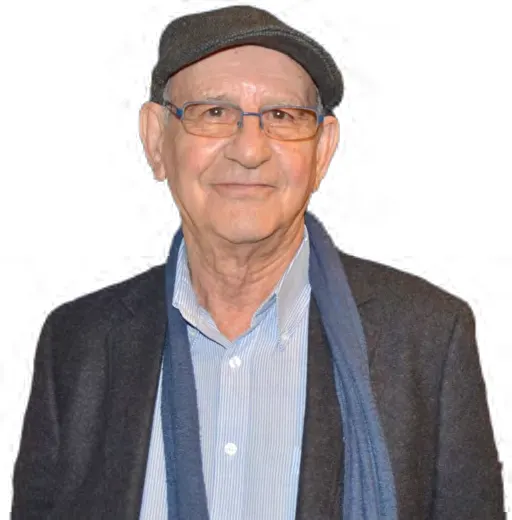
The Spaniard Manuel Calvelo Ríos, a geologist and winner of the SEN Prize of the United Nations Food and Agriculture Organization (FAO), was one of the promoters of the concept of Communication for Development and Social Change, and the main promoter of the communication proposal Multimedia Mass Pedagogy. He also trained the first producers of Televisión Nacional de Chile in 1969 and has spent years contributing from academia to communication and education, as well as to the training of marginalised rural and urban sectors.
What is communication for social change about, and what is its aim?
There are six basic types of message, three of which are Communication and three Information. First comes Pedagogical Communication, to share knowledge with those who need it to improve their living conditions, their social relationships and their management of ecosystems. Second, Scientific Communication, which overcomes the barrier of what we call “academic terrorism”, so that the population can take part in governments’ decisions on the direction of Science. And last, Communication for Participatory Organisation, understanding that to participate is to obtain or recover spaces of social power that have been denied or expropriated.
On the other side is Social Information, which is cultural, emotional and political, and which is intended to raise awareness and make it easier to take the right decisions, as well as to value and respect every kind of diversity and to seek equity. There is also Technological Information, for acquiring the tools we need and not the toys that are sold to us, expensive, with planned obsolescence and short lives. And finally Market Information, because the market is neither perfect nor transparent.
It is clear that we prioritise Pedagogical Communication and, in practice, we discovered that the theoretical Sender–Medium–Receiver model had to be replaced by a real model of communication, Interlocutor–Message–Interlocutor. In this model, the contents, the codes, the starting level, the structure of the account, the instrument, the formal treatment and the moment of exchange of the messages must be established and agreed with the majority interlocutor, or the grassroots population, or socially segregated segments.
Communication for Development and Social Change must be sustainable on four levels: Economic, Ecological, Energy and Equity. It does not seek equality, since the homogeneity of industrial products is a basic feature of their quality, whereas in the biological and social world the basic feature of quality is diversity. Diversity of every gender and sexual orientation, of skin colour, of beliefs, of cultures, of languages, and so on.
In what ways can we use communications to contribute to greater inclusion and less violence?
To begin with, we must not confuse mass media with media of communication, because they are not the same. We must use all alternative media, community radio stations, municipal TV stations, plus all the tools we now have at our disposal through the Net, and so generate and exchange messages that deal with the substantive issues for the population. Not those it demands, but those it needs, and here lies the role of the educator and the communicator for Social Change: to distinguish the demands derived from a consciousness imposed by manipulative and disinformation messages, and to work with messages that need the development and growth of an autonomous, supportive and equitable consciousness.
How could communication contribute to the mental health of children and to addressing abuse in all its forms?
First, to carry out an analysis of the messages the population is receiving through the mass media and the Net. After that, to seek the collaboration of well-known or renowned people to be the living faces of our messages when they need an internal sender.
After that, to train rigorously, within relatively short periods, the staff who are in a position to produce those messages without falling into the formal vices of current ones. Finally, to disseminate those messages, essentially audiovisual, through every available medium.
Guidelines for interviewing a victim of child sexual abuse
Current affairs · By Antonio Maldonado
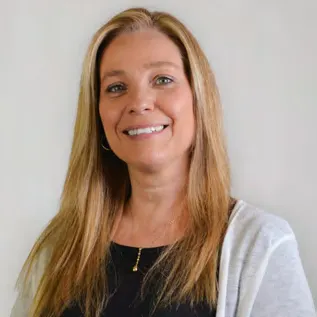
The coordinator of the care area of the Fundación para la Confianza, Paula Vergara Cortés, offers a series of recommendations for dealing with abuse-related subjects in the media in a responsible and humane way.
- Protect the victim’s identitySafeguarding their identity means recognising them and respecting their dignity; publishing it can be secondary victimisation. The names of parents, school or address can also identify them.
- Prepare the interview responsiblyAsk how far the person wants to go and do not interview them if they are not in a fit emotional state. Avoid names, details of the assault and questions that re-traumatise.
- Use appropriate languageDrop the Spanish word “menores” and speak of children and adolescents, as rights holders. Avoid words that stigmatise or “objectify”.
- Be clear with the victim and manage expectationsKeep in mind Law 21.057 on video-recorded interviews; insisting on an interview can cause unnecessary emotional harm. The person must be clear about the purpose of the interview.
- Turn to expertsSpecialised professional advice avoids re-traumatising the person interviewed and psychological harm.
- Provide information on channels of helpProvide educational content and offer the places where victims can obtain help.
1. Protect the victim’s identity
Safeguarding the person’s identity respects the right to personal intimacy and privacy; it is a way of recognising them and offering respect for their dignity as a subject, and it protects them from being recognised by others. Publishing their identity can constitute secondary victimisation and re-traumatise the person who has been a victim, exposing them to questioning or stigmatisation by their social environment, which will not necessarily be welcoming or part of the process of reparation. In many cases sexual abuse leaves feelings of guilt and shame, from the false belief of having taken part, of not having stopped the acts of violence or of being different from others, and exposing the victim by giving their name can aggravate this situation. On some occasions the child or adolescent is not mentioned, yet the names of the parents, the school or the address are given, which easily allows them to be identified.
2. Prepare the interview responsibly
You must find out and/or ask how far the person wishes to go with the information they can provide, without exposing themselves or dealing with the traumatic experience if the person is not in an emotional condition to do so. Be clear about the purpose of the interview, always bearing in mind that the information can help other people to ask for help by recognising their own experiences of abuse. Avoid questions that involve giving names, details of the assault or circumstances that re-traumatise by evoking events that often have an emotional impact or even cause significant setbacks in the person’s recovery.
3. Use appropriate language
The word “menores” must be dropped; the reference nowadays is to children and adolescents. Do not use concepts such as “Niño Abusado”, “Niño Sename” or “Menor Dañado”. Avoid concepts that “objectify” children, and always regard them as rights holders. An error that must be corrected has to do with the use of words that stigmatise the person affected, for example: MENOR ABUSADO, DELINQUENT YOUTH, THE GIRL WAS FOUND WITH A MAN WHO WAS ACCOMPANYING HER, or giving out private information without the consent of the family, the child, the adolescent, or information belonging to the investigation. Providing images of the person, especially if they are under 18 (the only acceptable use of the word “menor”) and having them circulated on social media.
4. Be clear with the victim and manage expectations
A person who has gone through this experience will have to take part in various settings where they must speak or be interviewed; in our country Law 21.057 on video-recorded interviews of children and adolescents is even in force, with the aim of preventing secondary victimisation and reducing the number of interviews, among other objectives, so that insisting on an interview can cause unnecessary emotional harm. If the victim agrees to the interview, they must be fully clear about its purpose, so that no false expectations arise about the results of making public content associated with this violation of their rights.
5. Turn to experts
On this subject it is important to have specialised professional advice so as not to re-traumatise the person interviewed and to avoid psychological harm.
6. Provide information on channels of help
When this kind of subject is covered in the media, educational content must be provided, and the places where victims can obtain help must be offered.
Why is it important to talk about suicide in the media?
Current affairs · By Antonio Maldonado
In recent years there has been a rise in coverage of complex subjects related to people’s mental health. One of them is suicide, one of the most common causes of death in our country. Correct treatment can be effective and contribute to the fight against one of the most difficult problems Chileans face today.
In September 2015, days after the death of Eduardo Bonvallet, the president of the Fundación José Ignacio, dedicated to suicide prevention among children and young people, Paulina del Río, was invited to a morning TV show to talk about the subject. The television segment was meant to last 15 minutes, but interest was so high that del Río had to stay on the programme for almost an hour. The next day, the foundation’s help email address received 400 emails with stories from people who had different levels of suicidal ideation.
“It was like a collective catharsis”, says del Río, who also reveals that it is something that has been repeated over time. “Every time suicide is talked about in the media we start receiving twice as many enquiries, requests for help for the person writing or for someone close to them. We have seen that young people feel very much reflected by the stories they see, hear or read, and that has a beneficial effect, because they realise they are not alone in this”.
Paulina explains that the media play a fundamental role in information and prevention. The taboo that prevented them from speaking before is not only the media’s but the population’s in general. When the media dare to touch the subject, there is a very positive reaction: people dare to say the word suicide, and that is the first step towards realising that it is something that can happen to anyone given a perfect storm.
“The media not only can, but must, talk about suicide.” Paulina del Río
“If at home you see TV programmes, interviews and reports about suicide, the same thing happens that has been happening over the last decade with sexual diversity. In my opinion, the media not only can, but must, talk about suicide”, she says.
However, communicating about such a complex subject cannot be taken lightly. The way in which cases are dealt with and presented must be especially careful and conscious that the person receiving the message may be vulnerable. “One must never glorify the person who took their own life, but always explain that the person was suffering greatly psychologically. Nor should the method used to end their life ever be mentioned”, stresses del Río. She also warns that in print media the news must not be placed on the front page but on one of the last pages; and in audiovisual media it must not be among the first items reported. Likewise, photos or videos of the suicide itself or of the wake or funeral must not be included.
When the media treat the subject seriously, drawing on mental health professionals, or on people who have processed their experiences and been educated in prevention or grief, the audience can learn that myths and prejudices must be broken down. And, most importantly, that we can all help to prevent a suicide simply by listening, validating, embracing and accompanying the person to seek professional help.
“I think the most necessary change is for us to understand that suicide prevention begins in the cradle, by encouraging healthy self-esteem, learning to detect signs of mood disorders or mental illnesses; by teaching the recognition of emotions, tolerance of frustration and conflict resolution from a very early age; by emphasising collaboration over competition; by making room for vulnerability (above all in men)”, del Río concludes.
How can we address different social groups with dignity?
Tips · Línea Libre (the Foundation’s helpline for children and young people)
Fourteen appropriate terms, according to the Línea Libre cards published in the magazine.
- Child and/or adolescentEvery person under 18.
- Older peoplePeople who make up the oldest social group.
- People living in povertyPeople who suffer deprivation in various dimensions.
- People deprived of libertyPeople who are in a relationship of dependence, subordination and custody with respect to the State.
- People experiencing homelessnessPeople who have no fixed residence and who spend the night in public or private places.
- People who suffer mistreatmentPeople who suffered physical or psychological abuse.
- People assaulted in the sphere of sexualityPeople who were victims of sexual abuse.
- LGBTIQ+People who belong to a sexual diversity.
- Victims of human trafficking and/or sexual exploitationPeople who have been moved and exploited without their consent.
- WomenUse neutral (non-gendered) language, paired forms (men and women) or use /(.
- Indigenous peoplesGroup of people who belong to an ethnic group.
- MigrantsA person who leaves the place where they lived and arrives at another destination to settle there.
- People with disabilitiesPeople with long-term physical, mental, intellectual or sensory disabilities.
- Person with a mental illnessPerson diagnosed with a mental disorder.
About this edition. Web version of the July 2021 issue of Por un Mundo sin Abuso magazine, published as a PDF in Spanish by the Fundación para la Confianza, with typographical errors corrected and new graphics summarising the content. Figures, dates and legal references are as of the date of the magazine. The Línea Libre (the Foundation’s helpline for children and young people) mentioned in this issue is currently suspended. Download the original PDF (in Spanish)
Editorial team. José Andrés Murillo, director. Verónica Uzcátegui, editor-in-chief. Nicole del Río, Carolina Rojas, Francisca Garrido, Daisy Seguel and Antonio Maldonado, contributors. Cristhian Sotomayor, graphic design and layout.
Translation by Fundación Para la Confianza. In case of any difference, the Spanish version prevails. Spanish version.