Magazine · June 2021 · Fundación para la Confianza
Por un Mundo sin Abuso (“For a World without Abuse”) magazine · June 2021: Dignified treatment of older people
The June 2021 issue, marking World Elder Abuse Awareness Day: the constitution and children, older people and the SOL service, sexual violence during the social uprising, dignified treatment of older people, impunity for sexual violence in conflict, and advice on what to say when someone discloses.
The constitution and children
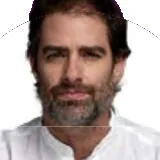
Chile is beginning a constituent period. This process should last about a year, or perhaps a little longer. 155 women and men have been elected to talk, to question, to receive contributions from citizens and to write the new Constitution that will govern our country for decades to come. They will arrive with their proposals under their arms, or perhaps ready to listen, to persuade and to be persuaded by other experiences and points of view, or by a broader, more inclusive, fairer vision.
Among all the issues and interests that will be debated, there is one that seems to me particularly important: the rights of children and adolescents. It is not a matter of raising public policies to constitutional rank, but of establishing a new approach, the children’s approach. This approach, which would give political, budgetary, legislative and administrative priority to children and adolescents, can transform the social and political climate in our country. To safeguard the comprehensive well-being of children and adolescents is to safeguard the well-being of every person in the country. There is no approach that, in its simplicity, is more inclusive, universal and effective for building a country that is healthier, safer, less violent, more caring and more nurturing than the children’s approach. At the same time, the absence of this approach can give rise to violence, injustice, unbridled competition, exploitation and contempt, the reduction of human beings to mere numbers, bodies, statistics, inputs, customers, a factor of production.
It is not about “putting the focus on children” but about creating an approach from children themselves. Childhood is an invitation to look at everything in another way. A mysteriously new way, like each of their questions. Questions that do not seek only a rational answer, but a summons, a deep questioning of the meaning of how we are acting, relating to one another, administering. That is the approach we need, and I invite the members of the Constitutional Convention to stop for a moment and think about it. I am convinced that this experience, however strange it may seem, is structural, common and shared, and lies at the base of the common pact that, as a country, we need to build.
José Andrés Murillo, philosopher, Director of the Fundación para la Confianza
Testimony: older people in the pandemic
María José Kaufmann, SOL psychologist
In my work as a psychologist at SOL, a channel of psychological support for adults, I have come to know, accompany and support one of the age groups most affected by the pandemic: older adults. No one is indifferent to the effects the pandemic has had on our mental and physical health, since it has affected all of us in some way. However, it is among older people that, in my experience, I have seen a particular and intensified distress.
Different people who have contacted SOL through WhatsApp, but above all by telephone, have told us of the deep loneliness they have felt over the past year and a half. They attribute that loneliness to several factors, such as not being able to see their loved ones or take part in neighbourhood activities. This was not only during the periods of total lockdown but throughout the whole pandemic, because of the greater risk they run.
To this is added the large number of calls about bereavement that we have received at SOL, in which we have had to listen to and support heart-rending testimonies from older people whose partners, relatives and friends have died of COVID.
If the pandemic has been hard and isolating for many people, through my experience on the helplines of the Fundación para la Confianza I have been able to live, first-hand, the isolation that older people experience, the loneliness they receive from a society that is tremendously discriminatory towards them. For that reason, and more strongly than ever, I believe it is necessary to listen to older people, to give them places to be heard and to unburden themselves, ethical places that make them visible, places where they are treated with the respect and patience they deserve and need in times like these.
María José Kaufmann, SOL psychologist.
Older people need to be listened to
News from the Fundación para la Confianza · By Diana Bernal Allendes
Strengthening social ties is one of the best ways to prevent the marginalisation and social exclusion of older people. That is why the Online Mental Health Guidance Service (SOL) of the Fundación para la Confianza has placed particular emphasis on bringing its help closer to this population.
The COVID-19 pandemic and its restrictions have shown how important and necessary it is to share and interact with others. This has had an enormous effect on the whole population and especially on older people, which is why the United Nations has expressed great concern, given that they tend to be a group pushed aside by the community.
The professionals of the Online Mental Health Guidance Service (SOL), launched in September 2020 by the Fundación para la Confianza with the support of Anglo American, have seen this clearly in the many calls they have taken from older people. And although older people are not the group that most often uses this channel, unlike the younger population, their need to be listened to is evident.
The psychologist and head of outreach at SOL, Antonia Samaniego, explains that the main reasons for their contacts are to ask for support in their role as carers or for information about access to social services. However, calls are also frequent about experiences of loneliness and sadness linked to the pandemic and its health measures, which have caused distance from loved ones, the interruption of their health treatments, or the discontinuation of regular spaces for community gatherings.
Samaniego states that it is important for society to create opportunities that strengthen the ties older people form, since they are the ones who feel most abandoned by it. It is also one of the most effective strategies for preventing the social problems associated with the marginalisation and exclusion of older people, and its benefits can be seen in both the short and the long term.
“By creating spaces for meeting and listening, they can take part in society, give their opinion on relevant subjects, be considered in decision-making, and contribute from their own experience and wisdom, creating communities that are more inclusive and more concerned about others”, the psychologist adds.
The health emergency, which has meant that everything had to be adapted to a remote format, has also exposed the digital divide that exists among older people. That is why SOL, responding to those needs, has made its work known to older people through outreach on the ground in the places they visit most in their communes, such as family health centres, neighbourhood associations and municipal offices.
On this point, Samaniego asserts that it is important to bring the programme closer to this age group, considering that there are technological, practical and ideological barriers to asking professionals for help. “If I had to give them a message, I would tell them that #PedirAyudaEsDeValientes (#AskingForHelpTakesCourage) and that it is always a difficult first step, but worth it. It is possible to find support to talk about your worries and resolve your conflicts”, she concludes.
The guidance provided by the SOL professionals is open to the whole community and entirely free of charge. You can contact them by telephone on 800 004 222, send a WhatsApp message to +56 9 8201 6781 or email sol@paralaconfianza.com, Monday to Friday between 10:00 and 22:00.
Diana Bernal Allendes
Social uprising and sexual violence: “unfortunately there are no reparation measures”
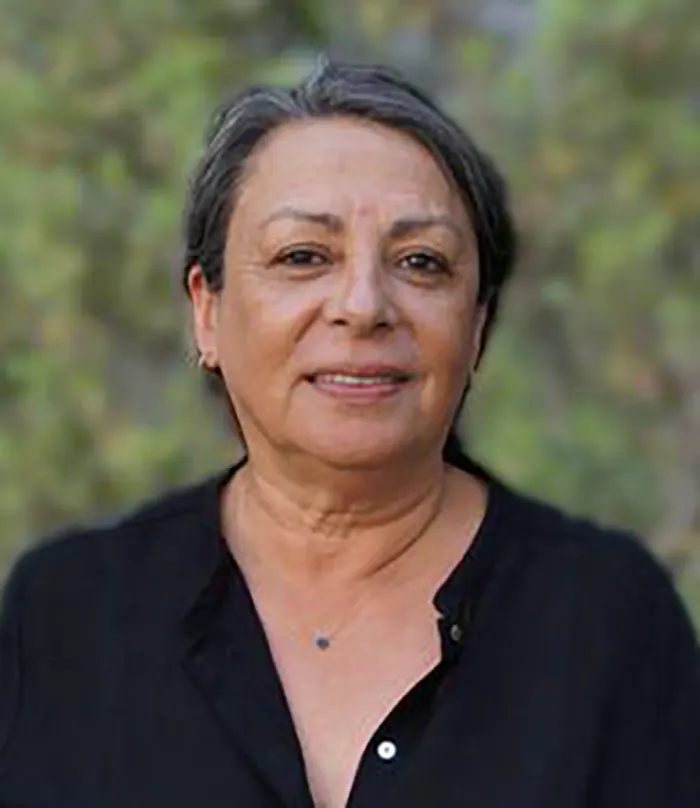
Interview with Consuelo Contreras, councillor of the INDH · By Diana Bernal Allendes
Councillor and former director of the National Human Rights Institute (INDH), Consuelo Contreras, speaks about the gravity of the largest recorded number of cases of sexual violence committed by State agents in recent times, and about the search for justice by the institution and the victims.
The use of sexual violence as a method of repression is not new in Chile. The INDH councillor says that its use since the return to democracy began during the student demonstrations in 2012. At that time they began to receive reports from female students who were subjected to touching and, in some cases, forced undressing after being detained at the marches. This continued to happen afterwards and reached its peak in the political crisis that began in October 2019.
During that period 460 cases of sexual violence were recorded, according to information from the Database of Victims and Legal Actions of the National Human Rights Institute. In this connection, Contreras says she is surprised by the small difference in the number of cases between men and women: “normally it is women who most experience sexual violence. I think there is under-reporting, or that women simply see it as an act of repression, but without the very powerful connotation of sexual violence”.
- 460cases of sexual violence recorded in the period, according to the INDH database
- 23%of the criminal complaints filed by the INDH concern sexual violence against children and adolescents
- 2012the year the INDH began to receive reports of this kind; the peak came from October 2019
Contreras also refers to the cases involving children and adolescents: “I had access to some data which say that, of all the criminal complaints filed by the INDH, 23% concern acts of sexual violence against children and adolescents, relating to touching and threats of rape. We have seen that in these cases there is no accompaniment or support from the Public Prosecutor’s Office, and no referrals to support programmes”.
The councillor says that the INDH has tried to provide additional support, because it “has taken legal action and is providing psychological support in some cases, above all for children and adolescents who are victims of sexual violence, so as to help them carry on with the judicial proceedings. But that is not the Institute’s task, it is not in its mandate nor does it have the necessary and sufficient resources for reparation measures. So, unfortunately, there are no reparation measures”, she adds.
And as regards the responsibility of the State, Contreras admits that human rights violations have hardly been acknowledged, nor has it been explained why there are no resources for reparation for the victims. In addition, compliance with the recommendations they made on human rights and justice in their 2019 annual report is very low, the refounding of Carabineros (Chile’s national uniformed police) being one of the most vital.
On the progress of the legal actions brought by the institution, the councillor says that “it is a process that moves slowly. There are cases in which it has been possible to identify the officials who committed human rights violations and who are going through the trials as defendants”. Specifically in the cases of sexual violence, she points out that it is very difficult to prove the facts, since on many occasions the police officers could not be identified, as they did not wear badges with their names or identification numbers.
The member of the INDH Council also refers to the visits and studies of international bodies, such as the Office of the United Nations High Commissioner for Human Rights and Amnesty International, on the violence carried out by State agents: “they all reached the same conclusions, it is the greatest human rights violation since the civic-military dictatorship”.
Diana Bernal Allendes
Dignified treatment of older people: a task that is necessary today and for the future
Current affairs · By Diana Bernal Allendes
Combating the stereotyped image of older people is a way of preventing mistreatment of this group, says the geriatric psychologist and president of the Fundación Míranos, Ana Paula Vieira.
Improving the treatment of older people is an objective of the greatest importance, not only because of the accelerated ageing of the world’s population, which will lead to one of the most significant social transformations of the twenty-first century, but primarily because dignified treatment means respecting older people simply because they are people, regardless of their age, sex, economic situation or health.
Precisely on this 15 June, designated World Elder Abuse Awareness Day by the United Nations, the aim is to raise community awareness of the recognition and respect of the rights of older people, rights that allow them to live well, free from the various forms of violence and abandonment.
In this regard, the psychologist and president of the Fundación Míranos, Ana Paula Vieira, speaks about the need to show society that the reality of old age is different and is not that negative perception in which the decline of physical and mental functions prevails. For old ages are diverse, and older people can and should continue to contribute both within their family circle and to the progress of society.
According to the definition in the Inter-American Convention on Protecting the Human Rights of Older Persons, old age is active, healthy and productive. For that reason, Vieira points out that age does not limit older women and men from taking part in matters that concern them, for example as active citizens. “It is important to encourage the creation of organisations, since collective participation will strengthen their voice and influence as valid interlocutors before the State and society”, she adds.
For the psychologist specialising in psychogeriatrics, “the view of old age as the end of useful life, and the welfare-based approach that tends to guarantee elementary material rights without incorporating the ethical dimensions of dignity as the essential right, end up regarding older people as objects and not as subjects of rights”.
That is why Vieira states that combating stereotypes of the image of this age group, besides being a cultural and educational task that must be considered central in public policy, is a way of preventing mistreatment. She also says she believes that “it is not about seeking an ideal of ageing, but the ultimate aim is to make possible the conditions and resources available so that older people live in the way they wish and with dignity”.
Following this last point, Vieira concludes that the State must ensure the comprehensive well-being of older people, meeting their basic needs such as access to a quality health system, personal development, among others. But to guarantee the dignity of older people, the simultaneous commitment of society and families is also necessary.
As for the demographic situation of our country, the Observatory of the Ministry of Social Development indicated in a 2020 report that Chile is one of the three most aged countries in Latin America. This again shows that working on good treatment of older people is a task that is necessary today and for the future.
Diana Bernal Allendes.
The fight against impunity for sexual violence in conflict
Current affairs · By Diana Bernal Allendes
This violence refers to rape, sexual slavery, forced prostitution, forced pregnancy, forced marriage, forced sterilisation, and other acts of sexual violence of comparable gravity perpetrated against women, men and children who have a direct or indirect connection with a conflict.
Every 19 June, since 2015, the International Day for the Elimination of Sexual Violence in Conflict has been observed, an occasion promoted by the United Nations to raise awareness of the need to end this form of violation and to honour the respective victims and survivors.
Combating impunity for this crime is a fundamental task for eradicating and preventing acts of this kind, which are motivated by political, military or psychological aims of controlling territory, population or natural resources. Some of the countries where they continue to be perpetrated are Afghanistan, Iraq, Libya, Yemen and Colombia.
The lawyer of the Corporación Humanas, Camila Maturana, points out that historically it is women and sexual dissidents who have suffered specific forms of sexual violence. And when it comes specifically to political sexual violence, it carries a message for the victims about gender roles and the subordination of women and girls.
Along the same lines, Maturana explains that it is complex for victims to report in a patriarchal society where they are stigmatised, their word is doubted and they are held responsible for what happened instead of the perpetrator. She also stresses that impunity does not stem from a lack of such reports. “Impunity is nothing other than naturalising certain behaviours and accepting them, not considering them serious. It is silencing the victims again and victimising them again”, she defines.
“Impunity is nothing other than naturalising certain behaviours and accepting them, not considering them serious. It is silencing the victims again and victimising them again.” Camila Maturana, Corporación Humanas
“With regard to political sexual violence, this impunity could be exemplified not only in the low proportion of convictions, but mainly in the invisibility of sexual violence when investigating and legally classifying the facts and imposing sanctions, in the cases where convictions are obtained. Also in the absence of specific reparation measures for these particular crimes committed against women”, Maturana clarifies.
The lawyer of the Corporación Humanas explains that, in order to confront impunity in these cases, it is necessary to have legal frameworks that adequately define these acts as crimes, that determine sanctions appropriate to their gravity, and that clearly set out the obligations of the different organs of the State in their preventive work.
Some of the preventive tasks Maturana points to are education and awareness campaigns on the rights of women and girls and on their personal integrity. Likewise, addressing these subjects in teacher training and in school curricula, which must be non-sexist and guarantee comprehensive sexuality education.
In addition, it is key to train public officials in human rights, especially justice officials such as judges, prosecutors and police officers, among others. In this way, cases of sexual violence can be dealt with from a gender perspective that respects the rights of the victims and ensures an adequate investigation and conviction.
- Legal frameworks that define these acts as crimes, with sanctions in proportion to their gravity and clear obligations for the organs of the State.
- Education and awareness campaigns on the rights of women and girls and on their personal integrity.
- Teacher training and non-sexist school curricula, with comprehensive sexuality education.
- Human rights training for public officials, especially judges, prosecutors and police officers.
At present, unfortunately, this struggle has been obstructed by the COVID-19 pandemic. In 2020, according to the report prepared for the UN Security Council by the Secretary-General, António Guterres, the pandemic has not only led to an increase in these assaults but has also affected victims’ access to help and their possibility of reporting.
That is why Guterres warns that the needs of victims and the response to sexual violence must be addressed. Only in this way can the vicious circles of violence and impunity that affect social cohesion, public health and peacebuilding be avoided.
Diana Bernal Allendes
What should I not say when someone discloses sexual abuse?
Tips · Línea Libre (the Foundation’s helpline for children and young people)
- “Why didn’t you tell me before?”When abusive dynamics are established, the victim is wrapped in a bond of trust and manipulation. For that reason it can take time before each person tells, and we have to know how to respect that.
- “Okay, but what else happened / what else did they do to you?”We must not press them to give more details. The victim will tell you what is needed for you to know what they went through; the rest is not essential. Listen carefully, with affection and respect.
- “But if they are so good, I don’t believe they would have done something like that.”Responding with a judgement (good or bad) makes the victim feel insecure, and does not offer the support they need.
- “But are you sure that happened?”Judging the victim or making them feel insecure can make it difficult for them ever to tell it again, and with it to reach out for help. That is why it is important not to cast doubt on what they tell us, and to reaffirm that it is good that they are telling us.
- “I went through it too, this will pass…”Every person is different and reacts differently to what happens to them. That is why we must never play down what each person feels, nor assume that they will go through a similar process.
So, what should you say?
Here are some phrases that can guide you:
- You are not alone.
- It’s all right, I’m going to help you.
- You are very brave to tell me this.
- None of this was your fault.
- This situation is very unfair to you.
- Together we will look for help.
About this edition. Web version of the June 2021 issue of Por un Mundo sin Abuso magazine (the PDF carries issue number 13), published as a PDF in Spanish by the Fundación para la Confianza, with typographical errors corrected and new graphics summarising the content. Figures and references are as of the date of the magazine. Download the original PDF (in Spanish)
Editorial team. José Andrés Murillo, director. Verónica Uzcátegui, editor-in-chief. Nicole del Río, Diana Bernal Allendes and María José Kaufmann, contributors. Cristhian Sotomayor, graphic design and layout.
Contact details given in the issue. José Ramón Gutiérrez 269, Santiago; contacto@paralaconfianza.com; telephone 56 9 62272718. The SOL details (800 004 222, WhatsApp +56 9 8201 6781, sol@paralaconfianza.com) are those published in 2021.
The Línea Libre (the Foundation’s helpline for children and young people) mentioned in this issue is currently suspended.
Translation by Fundación Para la Confianza. In case of any difference, the Spanish version prevails. Spanish version.