Magazine · No. 12 · Fundación para la Confianza · May 2021
Por un Mundo sin Abuso (“For a World without Abuse”) magazine · May 2021: National Day against the Commercial Sexual Exploitation of Children
The May 2021 issue, for the National Day against the Commercial Sexual Exploitation of Children (18 May): dignity and good treatment, the language for speaking about sexual exploitation without stigmatising, an interview with Denisse Araya, cultural diversity in Chile, the Ley Pascua and how to identify exploitation.
Dignity and good treatment
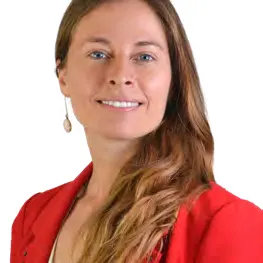
Good treatment goes beyond mere courtesy. It is based on something we talk about a great deal and understand little: dignity. Human rights are built on the principle of dignity. Dignity is the existential and political support that allows the construction of the rights we all share simply by being human. Dignity is not just one more attribute of persons; it is the intangible but present foundation, like the light that makes sight possible while itself being invisible.
The Chilean philosopher Juan Manuel Garrido, in his book on the foundations of human rights The Imperative of Humanity, says that “the imperative of humanity1 urges us to look”, that is, to make humanity present and to keep it present. We could add that the imperative of humanity urges us to listen and to act. Dignity demands that humanity be kept present in every concrete encounter with each person, but also in every design of public policy, regulation and Constitution. To listen means to go out and meet the other, who is always on the edge of isolation, reification, dehumanisation.
Listening can be transformative, both for the person who speaks and for the person who receives those words. It is what some have called “active listening”, because it intervenes and often rescues people from the senselessness of isolation, from solitary anguish. It is not just keeping silent so that another person can speak. Active listening shows the person who speaks that they are worth it, that the human encounter has meaning. Listening is active when it makes dignity present again.
Finally, the imperative of humanity urges us to act, that is, to transform the conditions in which people find themselves, so that their context is a reflection and recognition of their dignity and not the opposite. This is the true action that is urgent in light of the imperative of humanity.
Valentina Correa, acting director of the Fundación para la Confianza
1 Juan Manuel Garrido, The Imperative of Humanity: the aesthetic grounding of human rights in Kant (in Spanish), Editorial Orjik, Santiago, 2012.
Testimony: commercial sexual exploitation of children and adolescents
By Arturo Greene
As a Foundation we have had the experience of receiving victims of commercial sexual exploitation, and we know the marks it leaves on the life and development of the person who suffers it. We also know that the main challenge this presents for the person affected is being able to recognise themselves as a victim, because the surrounding environment, the exploiter and the person themselves all place blame on them for having consented to obtaining something in return for such sexual relations, even when that is not the case.
What constitutes commercial exploitation as such is the exchange, of any kind, for sexual services by a person under 18. In this sense, even though it may also constitute other offences, offering a favour, a gift or even food to a child in exchange for a sexualised interaction that they would not otherwise consent to could amount to exploitation.
The consent of a person under 18, even when it is apparent, is neither real nor valid; not only because of the perverse incentive that the object of the exchange represents, but also because of the situation of abandonment in which the victim generally finds themselves, which leads them to be in that position before the adult who exploits them.
In Chile, as in other countries of the region and of the world, the commercial sexual exploitation of children and adolescents is a reality that is not only made invisible but also disguised. That is why it is important that all of us professionals who work in contact with this kind of violation understand what lies behind this type of “offer”, and that psychologists, social workers, lawyers, prosecutors and judges alike learn more about sexual consent and the ways in which it can be vitiated, so that we do not add to the problem but are part of the solution to this grave reality that continues to affect the children of our country.
Arturo Greene
Speaking about sexual exploitation without stigmatising victims
News from the Fundación para la Confianza · By Marcela Valdebenito
Sexual exploitation refers to the abuse of a position of vulnerability, power or trust for sexual purposes, in order to obtain benefits from the exploitation of another person. That is why it is important to eradicate the myths and prejudices that exist on this subject through good use of language.
In the context of the National Day against the Commercial Sexual Exploitation of Children, it is important that all of us know the appropriate terms for referring to the subject, without stigmatising victims through language, as we often see replicated in the media or in our daily lives.
Trafficking in persons is defined as “the recruitment, transportation, transfer, harbouring or receipt of persons, by means of the threat or use of force or other forms of coercion, abduction, fraud, deception, the abuse of power or of a position of vulnerability, or the giving or receiving of payments or benefits to achieve the consent of a person having control over another person, for the purpose of exploitation”, according to the United Nations Office on Drugs and Crime.
It is also explained that exploitation includes, at a minimum, forced labour or services, slavery or practices similar to slavery, servitude or the removal of human organs, the exploitation of the prostitution of others or other forms of sexual exploitation. This last is a practice that is often made invisible, since there are only approximate figures reflecting this reality, because victims are unable to report.
On the other hand, the treatment given to these concepts has been accompanied by prejudices that end up stigmatising victims. The term prostitute is misused when it refers to children or adolescents, since there is no genuine will on their part to engage in commercial sex; rather, they are in a situation of vulnerability or under threat.
Along the same lines, another prejudice that has taken hold and that we must eradicate has to do with the socioeconomic situation of victims, where it is believed that they live in poverty. Not all victims are necessarily in this situation; we have seen that the internet has provided new forms of sexual exploitation through extortion or threats by perpetrators.
The appropriate term is therefore “sexual exploitation of children and adolescents” when we refer to victims who take part in sexual activity in exchange for something. For example, gain or benefit, or even the promise of such things, received by a third person, the perpetrator, or even by the girl, boy or adolescent themselves. It is important to remember that children and adolescents are forced into this activity through physical force or threat.
Finally, we will use the concept of “commercial sexual exploitation of children and adolescents”, which differs from the former when it is certain that there is an economic benefit for the person exploiting the victim. It is often linked to organised crime whose main motivation is its own profit, such as internet portals that supply children and adolescents for sexual abuse or provide child sexual abuse material depicting them.
Denisse Araya: “We must never use the term ‘child prostitution’”
Interview · By Ignacio Flores
On the National Day against the Commercial Sexual Exploitation of Children, we spoke with Denisse Araya, chair of the board of ONG Raíces, about the challenges we face in Chile and some concepts that we need to change.
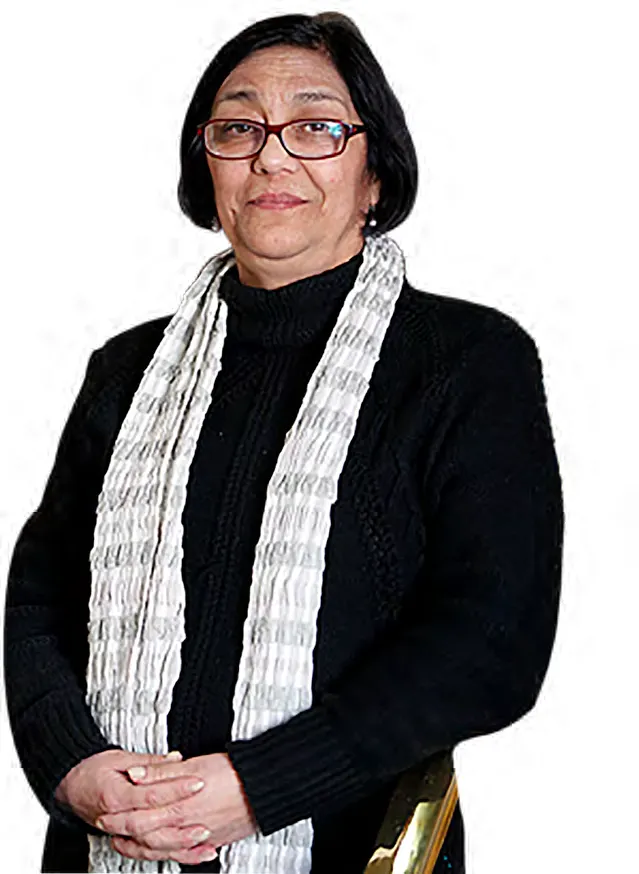
An important clarification made by the chair of ONG Raíces, before beginning, is that the acronym we should use to speak about commercial sexual exploitation is ESCNNA, the Spanish initials for commercial sexual exploitation of children and adolescents. Araya clarifies: “ESCI (another acronym) is Commercial Sexual Exploitation of Children, and where does that leave adolescents? They are the ones hit hardest by this issue. That is why we follow the rules of ECPAT International, which has been working on this issue for many years, and we are part of it”.
According to the Framework for Action against the Sexual Exploitation of Children and Adolescents, a document produced by the Ministry of Justice in 2000, ESCNNA is defined as “An activity in which an adult uses a person under 18 for sexual purposes in exchange for money or for some favours such as shelter or protection”.
On the reality in Chile regarding abuse, Denisse Araya explains that it is very difficult to have concrete data because it has not been given due importance: “Sename (Chile’s national child protection service at the time) has pledged for years, within the Framework for Action itself, that it would carry out a large-scale study, and the only one that has been done was in 2004, by ARCIS, Sename and the ILO.” This study concluded that, for that year, 3,719 children and adolescents were living in commercial sexual exploitation. On this figure, Araya says: “Now that we have travelled around Chile, we know that this is only a part and that there is much more exploitation, but there is no quantification”.
There is a significant lack of knowledge about these issues. On ESCNNA, the chair says: “The commercial sexual exploitation of children and adolescents differs from other types of abuse by the exchange; this can be in money, in kind, gifts, even protection. This situation leads society to believe the false idea that the child or adolescent has been “compensated”. The exploiter invalidates the criminal act because of the victim’s apparent consent”.
A factor that has a broad influence, Araya explains, is that the child or adolescent who is sexually exploited is often outside the system, receiving no education, and their close circle often naturalises commercial sex.
On the characteristics we need to bear in mind when identifying cases of ESCNNA, Denisse Araya states: “Children who spend the night on the streets, who move around a lot; there are many children who are all the time between home, the street and Sename, they have no clear place of residence, they move to different places and at quite unusual hours.” Another factor is their relationship with sexuality, Araya explains, since there are behaviours that are out of step with their age, eroticised or infantilised; there are also physical marks, such as blows, bruises, even sexually transmitted infections, and a high consumption of drugs and alcohol.
As a challenge, Araya says: “What needs to be done is to have more care centres, but real care, not just a group where people talk. Because in most cases the child who has suffered abuse does not speak, they feel guilty. These are long processes to work through”.
Cultural diversity in Chile: who makes up the population
Current affairs · By Marcela Valdebenito
According to the latest figures from the 2017 Census, 13% of the people in Chile recognise themselves as part of an indigenous people. Immigrants represent barely 4%. It is not ruled out that this figure will increase over the years. Yet there are many prejudices about them, which end up stigmatising and discriminating against them.
- 17,574,003people make up the total population of Chile, according to the 2017 Census
- 13%(2,185,729 people) stated that they belong to an indigenous or native people
- 4%(746,465 people) are immigrants, according to the INE
Our country is diverse both in its geography and in its culture. According to the figures from the 2017 Census, the total population of Chile is made up of 17,574,003 people. Within that universe, 2,185,729 people, that is, almost 13%, stated that they belong to an indigenous or native people. The three peoples with the highest percentage of concentration are the Mapuche, Aymara and Diaguita.
The study “Chile Dice 2018”, carried out in the country’s three main cities, Santiago, Concepción and Valparaíso - Viña del Mar, surveyed a thousand people on gender diversity, socioeconomic diversity, migrant diversity and the diversity of native ethnic groups. On the latter, barely 35.2 per cent of those surveyed mentioned encountering people who belong to indigenous peoples, even though they make up an important part of the population. This is explained, however, by the fact that we have historically lived alongside these ethnic groups, and their existence has been naturalised and recognised.
In the case of the immigrants who make up the total population according to the latest survey by the National Statistics Institute (INE), they come mainly from countries such as Peru, Colombia and Venezuela and number 746,465, that is, barely 4% of the population of Chile. Although it is a low percentage, it is a figure that has grown steadily over the last 25 years.
Therefore, “with the arrival of migrants we have seen that there are new flavours, customs and colours in our society. The arrival of a migrant means opening up to a new culture. That transforms social dynamics insofar as it means opening up to other cultures, which means appreciating the diversity that is part of life in the city”, says María Paz Trebilcock, head of the Sociology department at the Universidad Alberto Hurtado and in charge of the “Chile Dice 2018” study.
However, not everyone has the same capacity for openness; there are many judgements or prejudices associated with other cultures, which generally have to do with a lack of experience of the other, María Paz explains. “Skin colour, differences in customs, the imaginary of the other do not always work in a positive way. What is important is the experience of the other, because it transforms that prejudice into a judgement (positive or negative) that allows us to have an experience of the other. Hence the diversity of the city, and having that experience, makes it possible to improve tolerance of what is different”.
The cultural diversity present in Chile is a fact, and we can observe it every day. The likelihood that the migrant population will grow is high, since it has grown steadily according to the studies mentioned above. Abandoning the prejudices that the media sometimes install, such as associating migrants with crime or poverty, will therefore contribute to inclusion. It is important to remember that the act of migrating is a human right enshrined in the Universal Declaration of Human Rights.
Ley Pascua: an obstacle on Rapa Nui
Current affairs · By Ignacio Flores
Published in 1966 and incorporating the Rapa Nui people into the Chilean State, the Ley Pascua (Easter Island Law) was born as a reparation for the historical harm caused by the State to the people of the island, but it was controversial from the first moment because two of its articles are today considered “anachronistic” for the times we are living in.
Last year, in September, a defendant (imputado) in a rape case requested the application of the “Ley Pascua”, which in its article 13 provides that: “in the offences covered by Titles VII and IX of Book Two of the Criminal Code, committed by natives of the Island and in its territory, the penalty imposed shall be one degree lower than the minimum laid down by law for the offence for which they are responsible”. In other words, by applying this controversial law, a person charged with rape can have their penalty reduced by one degree.
One specification is that, to have the penalty reduced, one must be a “native of the island” and have committed the offence “in its territory”. Article 14 of this law, for its part, provides that the judge may allow the sentenced person to be deprived of liberty for one third of the sentence, while the other two thirds may be served outside prison. One argument for defending these articles is that they are “part of the culture”.
In offences under Titles VII and IX of Book Two of the Criminal Code committed by natives of the island and in its territory, the penalty is one degree lower than the minimum laid down by law.
The judge may allow the sentenced person to be deprived of liberty for one third of the sentence and to serve the other two thirds outside prison.
Ximena Trengove, president of the functional community organisation Maroa, of Rapa Nui, says of the Ley Pascua: “The most damaging thing is the harm and suffering it has caused in sexual offences, whether against children and adolescents or more serious offences such as rape.”
For Trengove, this law has become something anachronistic, since today it is a society that has evolved (let us remember that this law was published in ’66) and that has standards different from those that existed in the past. The president of Maroa says: “We cannot keep a law, specifically two articles (13 and 14), that are absolutely out of step with our reality”.
Trengove highlights the working groups held together with the Fundación Para la Confianza: “I want to highlight this because we ran some training sessions and working groups, mainly on childhood and gender, and we talked about the issues openly, with groups in which the institutions and programmes that arise from a public policy structure, as well as from the private sector, were represented”.
According to Trengove, since 2018 the issues of abuse have been activated, through petitions, marches, working groups and other initiatives. She also clarifies that, as Maroa, what they have mainly done is to listen and to “put what childhood issues mean in the front line”.
She also says that the working groups have been made up of lawyers, social workers, volunteers and psychologists who have problematised the different aspects arising from the controversial articles 13 and 14 of the Ley Pascua.
“I would say that in that sense good education work has been done; there is an Instagram account and a municipal radio that we use every Friday, and so on. I would give it a 6.5 out of 7 for what the education has meant”, says Trengove, about the work done in relation to the Ley Pascua.
As a final message, Ximena Trengove declares: “It is very important that these articles be reviewed. The fact that the doors have already been opened to review these articles is very important; now, how will the consultation be carried out? That is where I appeal to people’s conscience, so that we vote informed and are able to recognise a modification or a repeal of the articles”.
How can you tell that a child or adolescent is a victim of exploitation?
Tips · Línea Libre (the Foundation’s helpline for children and young people)
- Handling of moneyThe most frequent sign is the obtaining of large amounts of money or expensive items by children and adolescents. For example new clothes or mobile phones that have not been provided by their families or carers, but whose origin is unknown.
- Physical signsThe physical signs of the child or adolescent are key. The presence of physical maltreatment or of sexually transmitted infections.
- Relationships with adultsThe relationship between children or adolescents and adults who are unknown to those around them could be an indication of exploitation. This can be a warning sign for their families as well as for schools, friends and others.
- Mood and behaviourThe mood or behaviour of children or adolescents is affected when they are victims of commercial sexual exploitation. Signs of depression, anxiety, aggression and low self-esteem are examples. Some have problems at school, miss classes and perform poorly.
If you are a child or adolescent and need more guidance on this or other subjects, you can talk to a Línea Libre psychologist, confidentially and free of charge, from Monday to Saturday between 10:00 and 22:00. Get in touch by downloading the Línea Libre app, calling 1515 or visiting www.linealibre.cl.
About this edition. Web version of Por un Mundo sin Abuso magazine, No. 12 (May 2021), published as a PDF in Spanish by the Fundación para la Confianza, with typographical errors corrected. Figures and legal references are as of the date of the magazine. The Línea Libre mentioned in this issue is currently suspended. Download the original PDF (in Spanish)
Editorial team. Valentina Correa, acting director. Verónica Uzcátegui, editor-in-chief. Nicole del Río, Ignacio Flores and Marcela Valdebenito, contributors. Cristhian Sotomayor, graphic design and layout. Address: José Ramón Gutiérrez 269, Santiago. Email: contacto@paralaconfianza.com. Telephone: 56 9 62272718.
Translation by Fundación Para la Confianza. In case of any difference, the Spanish version prevails. Spanish version.