Magazine · No. 6 · Fundación para la Confianza · November 2020
Por un Mundo sin Abuso (“For a World without Abuse”) magazine · November 2020: ACODE, welcome, support and refer
The November 2020 issue: the acronym ACODE (Acoger, Contener y Derivar: welcome, support and refer) for responding to the disclosure of sexual abuse, an interview with the founder of the Jardín Azulillo, prevalence figures for child sexual abuse, how to report and tips from Línea Libre (the Foundation’s helpline for children and young people).
What does trust mean to me?
Testimony · Luciano Celis, School Climate Coordinator (Encargado de Convivencia) at the Colegio Mercedes Marín and counterpart in our “Alianzas para la Confianza” (Alliances for Trust)
Throughout my working life, I have always sought to establish trust as the basis of coexistence among the members of the community, because I firmly believe that every person is valuable for who they are and for everything they can contribute to society itself. However, it is a goal that becomes harder every day when we find ourselves in environments based on competitiveness, ignorance and the distrust that the world can present to us.
That is why I am grateful that on this path people and institutions are joining us, such as the “Fundación Para la Confianza” with its great human team, since they have managed to be a source of support at crucial moments in how to approach certain cases, and also agents of change in the way abuse has been normalised or made invisible for decades in our country.
I fully share the ideals the foundation promotes, because they are the same ones that have moved me all my life, both personally and professionally, and I would also highlight that it is the same team that at every moment models the very values that sustain them, making it a credible institution, coherent with its vision and with the contribution it makes to society.
“Being able to open my heart without fear, with hopes of contributing to a future without abuse, knowing that I am not alone at any moment.”
These days, trusting has become a very scarce good that few people know how to value; nevertheless, I have felt that trust in the time we have worked side by side, even in situations that go beyond work, and for me that is what trust is: being able to open my heart without fear, with hopes of contributing to a future without abuse, knowing that I am not alone at any moment.
Thank you very much!
Luciano Celis
Be alert to signs of abuse
The decalogue of abuse prevention · Rule 6 · José Andrés Murillo

Preventing child sexual abuse requires understanding its reality and its dynamics, as we proposed in rule 5. But it is also important to know more about how it shows itself, especially at the beginning. In many cases sexual abuse begins with small approaches, manipulations, demands to keep a secret, instances of disrespect that gradually become normalised.
Although most manuals describe physical indicators that may be signs that sexual abuse is being committed, these can be ambiguous and care must be taken when weighing them. Here you can find a list of these indicators with the due warning, since they are not mathematical proof. These indicators also vary according to age. Although just as important as the physical, psychological and behavioural indicators are the contextual ones.
I call on us to be alert to abusive relational contexts or climates, where the imposition of authority or manipulation prevails, as do lies or ambiguity in relationships, denigration and the abuse of power and of conscience. As a foundation we are convinced that the first prevention comes from creating a protective and respectful context. That is why the first manifestation of abuse also comes from a context that has become abusive.
When a relationship, a work team or a family climate begins to cloud over, it is necessary to pay attention, to intervene, to ask for help. Or when a child or adolescent is showing indicators that could be caused by abuse, it is also necessary to intervene. It may well be only a bad moment or some other stressful or traumatic situation. Then, for that very reason, it is necessary to ask for help, because we have to respond to their way of calling for help.
José Andrés Murillo
To prevent abuse, at the Fundación Para la Confianza we implement ACODE
News from the Fundación para la Confianza · Martín Navarro
Child sexual abuse is a relational phenomenon that involves a violation of rights and affects different spheres of the life of the child or adolescent who is the victim of the transgression.
Given the complexity of the subject, the disclosure of sexual abuse by a child or adolescent is a complex process, which requires adequate welcome and support from the person who receives the account. For this reason, all adults who work with children and adolescents, whether in education, extracurricular activities, residential care or other settings, need to know how to act on a disclosure, and to do so always from their role as guarantors of rights.
Speaking particularly of the education sector, there is a myth that only teaching staff need to be trained to receive a disclosure of abuse, since they are the ones in closest contact with the student body. In this way, a large part of the school community, belonging to other groups such as administrative staff, management or other staff, seems to be exempt from this responsibility.
At the Fundación Para la Confianza, we insist that any adult who is part of an educational establishment can receive a disclosure; the consequences of not properly welcoming an account of abuse can be extremely harmful. Along these lines, it is vital not only to know how to welcome a disclosure of sexual abuse, but also to properly support children and adolescents, and to know the internal protocols of each context, so as to activate them and make an appropriate referral.
For this reason, the Fundación Para la Confianza has coined the term A.C.O.D.E. This acronym, which stands for Acoger, Contener y Derivar (Welcome, Support and Refer), brings together the stages that must follow the disclosure of sexual abuse, and provides guidelines for acting in situations of disclosure. We set out each part of the acronym below:
- WelcomeListen to the account calmly and respectfully, in a safe space, giving it immediate credibility
- SupportListen calmly, make the person feel protected and make clear that they are in no way to blame
- ReferImmediately activate the establishment’s protocol, whether in the face of suspicion or certainty
What does it mean to welcome?
To welcome is to listen to the account of the child or adolescent calmly and respectfully. Ideally in a safe space, or one where the child feels protected. Welcoming an account of this kind has to go together with giving immediate credibility to the account of the person who was a victim of abuse or mistreatment. It is very important to remember that, for the person who discloses, it is a new act of trust in another person, and that act of trust deserves a response that rises to the occasion.
What does it mean to support?
Supporting the child who discloses has to do with calmly listening to the account and making them feel protected. It is important that they feel safe with the adult when recounting the experience. Comments such as “I will take care of this” are very powerful and can help support the child. When supporting, it is very important to make clear that they are in no way to blame for the situation that affects them.
What does it mean to refer?
The act of referring begins with the immediate activation of the Protocol for Responding to Situations of Mistreatment, Harassment or Sexual Abuse that the establishment concerned has. In educational institutions, this protocol must be included in the School Coexistence Rules (Reglamento de Convivencia Escolar).
Anyone can receive a disclosure and/or see indicators that suggest an abusive situation exists, which is why it is important to stress that the protocol is activated both in cases of suspicion and of certainty of abuse.
It is essential to bear in mind that the privacy and identity of the child or adolescent must be protected at all times, without exposing this experience to the rest of the community, in order to avoid new victimisation.
This initial referral is made by the person who receives the disclosure and/or suspicion of abuse to those identified within the establishment as responsible for dealing with this type of event, and they then activate the institutions and bodies that can take specialised charge of the violation of rights.
In this way, knowledge of ACODE becomes extremely important in any institution where people work with children and adolescents, so that the process of disclosure has real and ethical support that safeguards the child or adolescent.
Finally, besides knowing and being trained in ACODE, it is necessary to promote spaces for self-care and prevention, establishing clear channels of communication between groups. In this way, the aim is to foster trust and dialogue within spaces that protect the community, on the one hand, and that are also trained to deal with situations of abuse that may occur within it, on the other.
Martín Navarro
“Working with the foundation is one of the most significant milestones in the history of the Jardín”
Interview · Guadalupe Rodríguez, founder of the Jardín Azulillo · By Nicole del Río
On the occasion of the World Day for the Prevention of Sexual Abuse against Children (19 November), we spoke with Guadalupe Rodríguez, founder of the Jardín Azulillo, an educational community that, from the very first moment, took care to prevent sexual abuse in early childhood. And which today wanted to convey to us the importance of good treatment, lucid trust and the role that all of us have as protective third parties.
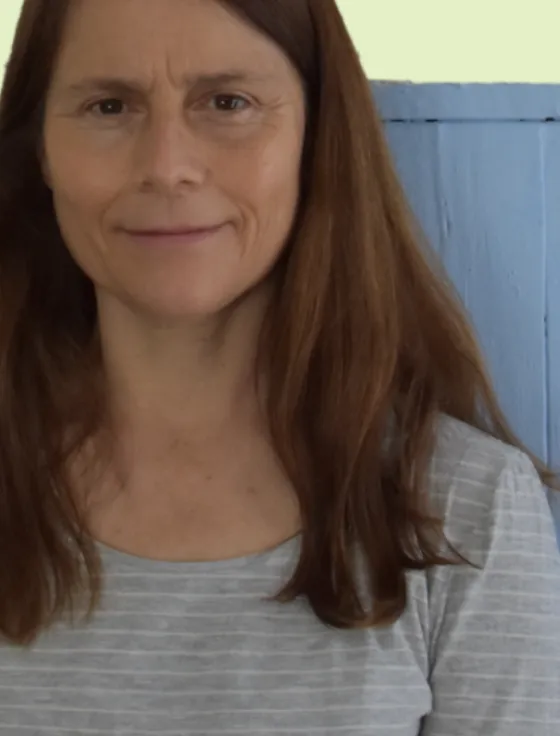
The Jardín Azulillo began in 1992 as a very small project, Guadalupe tells us, but with a different view of early childhood education at that time. Together with her husband and sister they built some classrooms behind her father’s house. He was an architect and had had experience in educational projects, so he was very emphatic about the need to create open spaces visible from outside to inside, to prevent abusive situations. Among the foundations of the Jardín Azulillo is respect for every boy and girl, so from the beginning there was awareness of the protection and care of each one, and as time passed a protocol for the prevention of child sexual abuse was created, very intuitively.
After seeing what was happening in Chile regarding abuse, the Jardín Azulillo began to place a growing emphasis on training its team and families, holding annual talks with a psychologist who is an expert on the subject. Later a team training was held with José Andrés Murillo, and after that they decided to work with the Fundación Para la Confianza. For two years they were part of the Alianzas Para la Confianza, a project whose aim is to update and validate the protocol for prevention and for action in cases of child maltreatment and sexual abuse.
“Working with the foundation is one of the most significant milestones in the history of the Jardín because, as an educational establishment, we must take on the responsibility of being guarantors of good treatment and of respect for the rights of children, we have the duty and the urgency to inform ourselves and to work permanently for a world without abuse.”
In this sense, one of the great lessons is that good treatment is the foundation of prevention and that it must be established everywhere, including the family, education and the community as a whole, because “If children feel that the adults around them behave in ways where, for example, they take care not to make them uncomfortable, that they are able to ask… that is already protection. And if they are with another adult who does make them uncomfortable, then they can say ‘no, I am not treated this way’.”
For Guadalupe, having built this protocol through a participatory process makes it a living experience and not something that is kept in a drawer. “It is having a concrete tool that we can not only turn to but that has to be there. And it is basically being permanently part of the fight against abuse, it is something that is incorporated, it is not that last year I was in that, it is something that is installed, fighting against abuse is part of your being a person.” Finally, she stresses the importance of understanding lucid trust, of understanding that all of us can be protective third parties and that we can always fight against abuse wherever we are.
The prevalence of abuse worldwide
Current affairs · Fernanda Peñaloza
When we read the words Child Sexual Abuse (CSA), we think of black-and-white images of violence and silence. Not only thoughts are shaken, but also the body, which comes into contact with deafening emotions.
CSA is a reality and, even more, a worldwide problem. The figures that recognise it warn, in a shocking way, of the reality of many children. How many children and adolescents experience abuse every year? How many have been able to disclose it? Prevalence is the measure that allows us to recognise how many children have been violated in the sexual sphere during a limited period of time and as part of a given population, making it possible to identify the frequency of the phenomenon, estimate its probability and generate explanatory hypotheses about it.
Worldwide, CSA is considered the health problem with the highest prevalence, reaching 12%, and it is indicated that 1 in 10 children and adolescents are victims of this violation of their rights. Africa is the continent with the highest prevalence (34%), followed by Asia (23.9%), America (10.1%) and Europe (9.2%). From a gender perspective, the WHO states that 1 in 5 women and 1 in 13 men report having suffered CSA before the age of 18 (a prevalence of 20% and 8% respectively). In Australia the highest percentage of girls who have been victims of abuse is found (21.5%), and in Africa, of boys (19.3%). As regards age, it is estimated that those of school age are more vulnerable, the average age being 10. Girls are at greater risk of abuse at an earlier age and over a longer period of time, and boys at later ages and for a shorter period.
- 12%Worldwide prevalence of child sexual abuse: 1 in 10 children and adolescents
- 1 in 5 and 1 in 13Women and men who report having suffered child sexual abuse before the age of 18 (20% and 8%, according to the WHO)
- 6%Of all violations in the sexual sphere that are estimated to be reported
In Chile, UNICEF indicates that of the 71% of children and adolescents who have suffered some type of mistreatment, 9% corresponds to CSA. 55% say it was a single event; 24%, that it was repeated; and 12.2%, that it was frequent. For its part, the National Victimisation Survey on Intrafamily Violence and Sexual Offences indicates that the prevalence of CSA is 7.3%, and that, in line with the worldwide trend, girls in Chile are estimated to suffer sexual abuse twice as much as boys (9.9% and 4.7% respectively).
Despite this, there is a dark figure regarding identified cases of CSA. The WHO states that prevalence measurements are influenced by the definitions of CSA, by the research methodology and by how the matter is approached at the political, social and family levels, which makes its disclosure and reporting difficult (it is estimated that only 6% of all violations in the sexual sphere are reported). This produces great variability in results worldwide and even between different local studies.
At present, it is important to consider how the ravages of the COVID-19 pandemic will influence future CSA prevalence measurements, since reports of violations of rights have fallen considerably in these months. Not precisely (nor fortunately) because they have ceased, but rather because the processes of disclosure and reporting have been interrupted or left without resources. This already poses a great challenge, not only at the research level but above all at the political, social and family levels, levels from which the channels of disclosure, reporting, support and reparation must be guaranteed for all the children who suffer sexual abuse.
Fernanda Peñaloza
How do I report?
Current affairs · Magazine infographic
- WhereProsecutors’ offices, Carabineros, the Investigations Police or any court with criminal jurisdiction
- What to reportWhen and where it happened, who committed it and who the victim is, witnesses or evidence, and a precise account
- What happens nextInvestigation, formal charges, precautionary measures and, in the end, dismissal, indictment or a decision not to proceed
Where
Under the law, criminal reports can be made directly at the offices of the Public Prosecutor’s Office (Fiscalías), Carabineros (Chile’s national uniformed police), the Investigations Police (PDI) or any court with criminal jurisdiction.
- It is possible to file the report at the police station closest to where you are.
- At the Public Prosecutor’s Office, a report can also be filed by email, through a form on the website.
- There is also the option of going to the police headquarters closest to you or calling 134.
Information
- The time when the event occurred.
- The place where the events occurred.
- The identification of the person who committed the offence. The identification of the victim.
- If possible, naming any witnesses or pieces of evidence you have.
- A precise account of the criminal act.
Process
Carabineros or the PDI will send the information to the Public Prosecutor’s Office so that the first steps can be ordered. If the report was filed directly with the Public Prosecutor’s Office, the prosecutor will do so directly.
- Investigation. If an investigation is opened, the prosecutor will order the steps necessary to find out what happened, who was involved and in what circumstances the offence occurred.
- Formal charges. When the Public Prosecutor’s Office has been able to establish that an offence exists and that the person under investigation (imputado) took part in it, it will formalise the investigation. This is the notification the prosecutor gives to the person under investigation that there is an investigation against them.
- Precautionary measures. Different precautionary measures can be requested to protect the victim, society or the investigation while the process lasts. A precautionary measure is not a sanction.
- Dismissal. Investigated facts that do not constitute an offence, a determination that the person under investigation is innocent, extinction of criminal liability, among others. End of the proceedings.
- Indictment. When there is sufficient information to bring the person under investigation to trial. It will give rise to a trial.
- Decision not to proceed. When not enough information has been gathered in the investigation. It allows the proceedings to be reopened if new information appears.
Tips
Tips · Línea Libre
When someone tells you they were a victim of sexual abuse, never say:
- “What? He/she is such a good person, I don’t believe they did something like that.”Why? It is important not to pass judgement on what you are being told. The moment in which the person is telling you is very complex and difficult, both for the person telling and for the person being told, so responding with a judgement (good or bad) makes the victim feel insecure and does not provide the support they need.
- “OK, but what else happened / what else did they do to you?”Why? We must not pressure people to tell us more details; the victim, when speaking, will tell you what you need to know about what they went through, the rest is not essential. We must accept what we are being told, believe. Listen attentively, in a caring and respectful way.
- “It happened to me too, so calm down, this will pass…”Why? Every person is different, every body and mind reacts differently to what happens to us, so we must never play down what each person feels, nor assume that, because some people got over it, the process will be similar for others. Do not judge; accompany the person telling you at their own pace and in their own time.
- “But are you sure that happened?”Why? Judging or unsettling the victim can make it difficult for the person to trust someone again in order to tell, and as a result makes it much harder to come forward and ask for help. That is why it is important always to be disposed not to doubt what we are told, and to reaffirm that it is good that they are telling us.
So, what should you say?
Here are some phrases that can guide you:
- You are not alone.
- Calm down, I am going to help you.
- You are very brave to tell me this.
- None of this was your fault.
- This situation is very unfair to you.
- Together we will look for help.
Be careful about
- Making promises you will not be able to keep (e.g. “you will never have to tell this again”, because we do not know whether that will really be the case).
- If the victim is an adult, do not pressure them to report; it is the person who was a victim who has to decide, once they feel ready to face a judicial process. Make sure they have emotional support.
- If the victim is under 18, by law you must report.
Remember that
If you cannot think of anyone who could listen to you or accompany you, we are with you (#EstamosContigo). If you are a child, an adolescent or a young person, let us talk about what is happening to you, find support from our psychologists at Línea Libre, who are professionals and can help you hold what you feel, in a confidential and free way, between 10:00 and 22:00 from Monday to Saturday. Get in touch by downloading the “Línea Libre” app, calling 1515 or visiting www.linealibre.cl.
About this edition. Web version of the November 2020 issue of the magazine Por un Mundo sin Abuso (the cover carries the number 6), published as a PDF in Spanish by the Fundación para la Confianza, with typographical errors corrected and new graphics summarising the content. Figures and legal references are as of the date of the magazine. Línea Libre, mentioned in this issue, is currently suspended. Download the original PDF (in Spanish)
Editorial team. José Andrés Murillo, director. Verónica Uzcátegui, editor-in-chief. Nicole del Río, Luciano Celis, Fernanda Peñaloza and Martín Navarro, contributors. Cristhian Sotomayor, graphic design and layout. Address: José Ramón Gutiérrez 269, Santiago. Email: contacto@paralaconfianza.com. Telephone: 56 9 62272718.
Translation by Fundación Para la Confianza. In case of any difference, the Spanish version prevails. Spanish version.