Magazine · September 2021 · No. 15 · Fundación para la Confianza
Por un Mundo sin Abuso (“For a World without Abuse”) magazine, September 2021: Inclusive education
The September 2021 issue, published in the month of Chilean national identity: testimony of two students on living in Chile, the Hablemos de Todo chat, migrant children, inclusive education, children in Afghanistan and tips for encouraging inclusion at home.
A small confusion in defending children’s rights
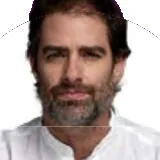
I have noticed a certain confusion about why it matters to defend children’s rights. We adults usually think that we have to create systems to protect children’s rights because children are fragile and need special strengthening. The duty is an adult one because children and adolescents have a problem, a particular weakness in the face of the strength of those who are older. This “adult-centred” view is not entirely false, but it is not entirely true either. It is fundamental, but not only because children and adolescents are more fragile: it is because we adults lose all authentically human orientation when we stop having the perspective of childhood. It is we adults who are unprotected and lost without the vision of childhood. The question always comes from another place, where supply and demand, costs and benefits can find no balance and make no sense. Where the gratuitousness of play and solidarity weigh more than any possible transaction, and where the very presence of a child is a challenge, a summons.
One of my deepest memories from my time as a teacher is having felt deeply questioned by children without their even asking a question. The meaning and reason with which I arrived armed were insolvent before the tenderly inquiring gaze of a group of children who demanded of me greater coherence, commitment and even existential innovations. The gratuitousness of children’s play is a serious matter; that fragility is strength, as long as we adults let ourselves be challenged.
And this is also politics. The care of childhood can be understood as a political paradigm if we stop seeing children only as weak beings, as diminished lesser ones, and see them as bearers of a new vision, revolutionary in the most authentic sense of the word: an energy that calls us back to the essence of life in common, of the shared world and of a nature that is endangered today. This is what I have called a politics of tenderness, and it is not because children are tender and must be cared for, but because we adults go about lost until we let ourselves be challenged by childhood and recover our ethical awareness. Let us hope it will be a more lasting awareness.
José Andrés Murillo, Executive Director of the Fundación para la Confianza
What does living in Chile mean to you?
Testimony of two students from the Liceo Juan Pablo Duarte school
Clara, fourth-year secondary student
Living in Chile is a contradiction, like everything, I think. It is beautiful, fun, exciting and rewarding; on the other hand, it is disheartening, sad and irritating. Everyone believes it is a bad country, of ignorant and foolish people, but the truth goes far beyond that. Our homeland is a place where, despite the misery and sadness, laughter and goofing around reign, or as we like to say here, the “chacoteo” (playful banter).
Where, even though they try to instil in us a feeling of selfishness and individualism, one can still receive a smile that is simple but full of love and good intentions. Walking down some streets may seem dangerous and awaken all our senses, not with the best stimuli, or strolling along some avenues you may see beautiful buildings covered in graffiti; but within those same settings you will also find situations that bring up lovely feelings in you, such as when you go to buy something from a street vendor and they address you with terms such as “mi reina” (my queen) or “mi vida” (my life), which lift our ego; or when we arrive at the famous Alameda (Santiago’s main avenue) and come upon a march, which shows us that the people of Chile are not conformist and that they fight for what is good and necessary for each of us; or even when we get on the metro after a long, tiring day and find that some street artist wants to share their talent with us, which teaches us that art can flourish even in the simplest and most everyday places. For this and more, I am not ashamed to say that I am Chilean, and I go beyond the definition of Chilean as such, I reach the essence of this word and share it here. I like being Chilean.
Alexandra, first-year secondary student
My name is Alexandra, I was born in Peru and I have lived in Chile since I was six. My family and I came to Chile because of my father’s work. At first I was afraid, not only because I was coming to a country completely unknown to me but also because I would not have my family nearby and I did not like that, but at the same time I was curious to get to know a different country. I first arrived at the Colegio Juan Pablo Duarte in first grade, and there I made many friends whom I still keep today. Now that I am fifteen I have learned how important that is to me, I am grateful to have come to this country because I would not change my life, I like how it is because here I grew up and matured, I had wonderful moments such as the birth of my little sister or when I discovered what I wanted to dedicate myself to, where both my parents and my teachers supported me without hesitation. I have already visited some places in Chile such as Valparaíso and the Cajón del Maipo and on those trips I have tried new dishes, I have learned about its traditions and its typical dances. Now that it is September I see how everyone is happy and excited about the national holidays, something I also feel, and it does not matter what has happened in the world with this pandemic because that joy does not change.
Hablemos de Todo: a first step in the mental health of adolescents and young people
News from the Fundación para la Confianza · By Diana Bernal
Psychologists from the Fundación Para la Confianza take part in staffing Hablemos de Todo (“Let’s Talk About Everything”), a psychosocial guidance chat that seeks to support Chilean young people and break down myths about their mental health.
During August, the Fundación Para la Confianza reaffirmed its commitment to mental health and will continue supporting the psychological help channel Hablemos de Todo, aimed at young people aged 15 to 29. The project, driven since June 2020 by the National Youth Institute (INJUV), also provides information on self-care and wellbeing on a range of topics, such as HIV/AIDS, adolescent pregnancy and cyberbullying, online and through activities.
The psychological guidance line is staffed by professionals from the Foundation and consists of a free, confidential chat, available on the Hablemos de Todo website. The programme’s coordinator of psychologists, Catalina Piraino, says that many of the enquiries they receive are from emerging adults and tend to relate to depression, suicidal ideation, panic attacks, self-harm and even problems linked to the pandemic.
“We are the first help. We will encourage, we hope, the person to begin a process of therapy so as to go deeper into these issues”, explains Piraino. She adds that asking for help is a first and great step, so it is an achievement that they reinforce in their sessions, since there are cases where young people talk about their problems for the first time in years.
Although remote care is something the chat’s psychologists have experience in, the coordinator admits that it is always a challenge, and stresses that trust is key in the process: “the main thing for us is the bond at the start, building the person’s reason for consulting together, and for this it is important to balance emotional support”. This is in addition to assessing risk factors to the user’s integrity or the need for intervention by other professionals.
Another challenge the INJUV initiative’s team has had to face is the taboos and prejudices about asking for help. “We fight against that every day. The fact that it has to be confidential, there we see that there are many people who perhaps would not get in touch if it were not so. And that has precisely to do with the stigma around mental health”, adds Piraino.
Along these lines, the psychologist says that as a team they seek to make people understand that mental and physical health are equally important and are interrelated. She also states that people feel a great deal of guilt when asking for help, tending to minimise what they feel.
They also try to break down the abundant myths in this area of health, such as those around suicidal ideation, which tend to claim wrongly that people who say aloud that they intend to take their own lives will not do so.
“Asking for help takes courage and means knowing our limits, trusting another person, working together and knowing that we are not alone.” Catalina Piraino
Catalina Piraino stresses that “asking for help takes courage and means knowing our limits, trusting another person, working together and knowing that we are not alone”. With this, she invites adolescents and young people to bear in mind that this programme is a first setting in which they will be able to find new perspectives and support, in a society in which their mental health is often forgotten.
If you need emotional support or psychological guidance, you can use the Hablemos de Todo chat free of charge. Psychologists from the Fundación Para la Confianza will be at your disposal from Monday to Friday between 11:00 and 20:00. To access it you must go to the website https://hablemosdetodo.injuv.gob.cl/.
Patricia Loredo: “Despite decades of human mobility in Chile, there is still no response that welcomes or incorporates children”
Interview · By Joaquín Mansilla and Héctor Espinoza
The psychologist, holder of a master’s degree in Psychosocial Intervention from the University of Barcelona and Executive Director of the Corporación Colectivo Sin Fronteras (a Chilean non-profit working with migrants), spoke about the complex scenario that migrant children and adolescents face in Chile.
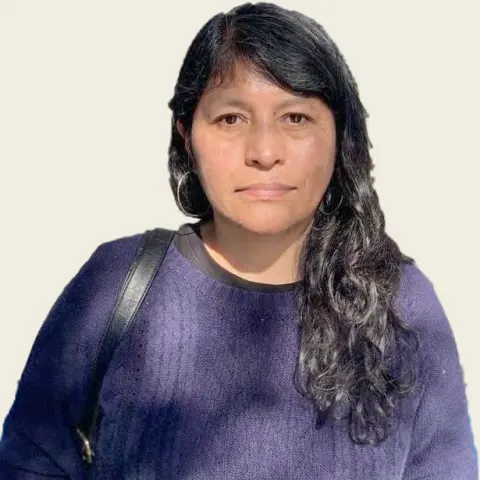
Migration is one of the most common consequences of a social conflict, in which thousands of people move in search of a prosperous future. This process involves a series of adversities that turn it into a critical and highly conflictive situation, in which a large part of the rights of children and adolescents are violated. Among them, their social participation.
On this reality, the Executive Director of the Corporación Colectivo Sin Fronteras, Patricia Loredo, maintains that “there is evidence in various studies that most children are not asked their opinion before the migratory journey. This decision to move, like many others, is generally not talked through. Which has clear implications, for example, the resistance to family reunification. It is not easy for them to break the ties in their countries of origin, with their relatives, with their habitat. In short, with everything relating to their meaningful spaces”.
According to Loredo, the situation regarding the changes that human mobility is undergoing is worrying and unfolds under very risky conditions. These circumstances show themselves from the point of departure, and in Chile they result from the failure of a consular visa policy, the visa being the primary document for regularising stay in the territory, which has been denied for the most part to Haitian and Venezuelan migrants. The professional explains that “what happens is that families are in large part entering with basic documents from their country of origin, and with that, in Chile they are not allowed to cross the border”.
For that very reason, the social effects on migrant children and adolescents are alarming. “Children and young people are left out, for example, of the health system, even though they should not be. By regulation they should be enrolled. However, for various reasons, on average half of the families who have entered irregularly are being left out of the health and education systems. On top of that come the difficulties in the employment situation of the responsible adults”, Loredo points out.
“Children and young people are left out, for example, of the health system, even though they should not be.”
In addition to these factors, racism and cultural barriers loom large, and besides abruptly interrupting any opportunity for participation or leading roles in society by migrant children and adolescents, they build a chain of everyday discrimination.
On this, Loredo states that “Here there are groups that are far more exposed to exclusion and discriminatory treatment, such as Afro-descendant children; those from Bolivia or Peru; and above all migrants from Haiti, who also face the language barrier. For example, most educational establishments are unable to have an educational strategy. There are few communes (municipalities), such as Recoleta or Quilicura, that have considered language facilitators or intercultural mediators.”
Finally, Patricia Loredo mentions that “the process of mobility is not negative in itself, rather it is the context, which, because of the conditions in Chile, means quite a great stress for children and adolescents. Despite decades of human mobility in Chile, there is still no response that welcomes or incorporates children, and that is the main focus of negative impact”.
Inclusive education: the challenge of the new Chile
Current affairs · By Diana Bernal
Valuing diversity is a task that falls to society as a whole; however, Educación2020 stresses that it is vital for this work to start in schools.
Understanding the difference between educational inclusion and integration is fundamental in these times of change in Chilean society. Migration or the struggle for the rights of the LGBTIQ+ community, for example, prompt us to ask how to address the presence of diversity within schools.
The deputy director of education policy at the Educación2020 foundation, Jorge Ibáñez, clarifies that the key is that the inclusive approach focuses on adapting to students, while the integrative one seeks that they be the ones who adjust to a system designed for the majority. Although the latter ensures access to education, it does not guarantee other fundamental processes such as learning.
- Inclusive approachIt focuses on adapting to students.
- Integrative approachIt seeks that students adjust to a system designed for the majority. It ensures access to education, but does not guarantee other fundamental processes such as learning.
“What an inclusive approach does is value diversity and find opportunities in it. From there, it seeks to minimise as far as possible all the barriers to learning, participation and school space”, he adds. He also explains that the role of the educational community is crucial, since it is on that community that the inclusion of children and adolescents in the education system depends.
Ibáñez states that “the gaps we have today in favouring the process of inclusion in schools are a correlate of the difficulties we have as a society in including diversity”. For that reason he stresses the need for education policies, so that projects on this are implemented in schools.
Regarding the above, he points out that in Chile policies have aimed at the integrative perspective. In the case of foreign students, for example, access to schools has been prioritised from a purely rights-based view. One example is the introduction of the Provisional School Identifier (IPE) number, which allows those without a Chilean national ID number (RUT) to enter the education system.
Although Ibáñez says he values the Ministry of Education’s initiative, he admits that on inclusion “we have a quite high gap and it could be said that we have not yet caught up as a country, considering the levels of migration that have been growing recently”.
The deputy director of Educación2020 suggests that programmes to promote this approach should be in keeping with the reality of each territory, should incorporate the whole educational community and should be comprehensive. This is so that they take into account: the curriculum, the areas of school coexistence, work with families and pedagogical innovation strategies that favour dialogue and appreciation among diverse students.
“It is important, both for migrant children and for those from the LGBTIQ+ community, that more democratic school cultures be promoted within educational communities. That they promote constant communication, that there be different channels of information and interaction to address conflicts on inclusion and equity”, he adds.
Progress in inclusion is so significant that, among many benefits, it could contribute to preventing bullying. In the words of deputy director Ibáñez, “we could move towards a much more open, dialogue-based society, one that puts collective interests before individual interests. Seeking to build the common understands everyone as equal in rights, but also different in our particularities”.
“We believe that building a school is important because it reflects the society to which we aspire.” Hence the relevance of giving priority to socio-emotional learning and of the social project of inclusion starting from schools, Ibáñez concludes.
Invasion of Afghanistan: a conflict that threatens the present and future of children
Current affairs · By Héctor Espinoza
The crisis being lived in this country since the Taliban offensive has had serious consequences for its whole population. However, it is women, girls and boys who have been particularly affected. According to figures provided by UNICEF, nearly 10 million children need humanitarian aid to survive, and it is estimated that a million of them will suffer severe acute malnutrition during the year.
The situation Afghanistan is going through has precedents that create great uncertainty about the future of its population. During the Taliban government between 1996 and 2001, strong restrictive measures stemming from an extreme adherence to Islamic law curtailed the rights of many inhabitants. This in a country where, for example, according to UNICEF data, 3.7 million children do not attend school, and 60% of them are girls. According to statements by Henrietta Fore, its Executive Director, since January the United Nations has documented more than 2,000 grave violations of children’s rights, and approximately 435,000 children and women are internally displaced.
- 10 millionchildren need humanitarian aid to survive
- 1 millionwill suffer severe acute malnutrition during the year
- 3.7 millionchildren do not attend school
- 60%of the children who do not attend school are girls
- 2,000grave violations of children’s rights documented by the United Nations since January
- 435,000children and women internally displaced
For Emilia Vergara, Executive Director of Brave Girls, a foundation that works to achieve gender equity from childhood, the situation the Afghan population is living through is the reflection of a long process, which today receives media coverage but which nevertheless happens in many territories.
The work that Brave Girls carries out aims to transform the education model into one that puts gender equity and socio-emotional development at the centre, also taking into account the importance of the participation of children and adolescents in the different spaces of society.
From this point of view, Vergara explains that the current scenario in Afghanistan causes setbacks on gender, noting that “a power is installed that makes it possible to see that there are marriages of girls and adolescents, public beatings of women, that takes girls and women out of education, does not allow them to work, normalises and installs the culture in which violence is permitted, mainly towards women and towards sexual and gender dissidents, in all spaces”.
Vergara also refers to the impact on the full development of children in contexts like that of Afghanistan, since, as she explains, exposure to these levels of violence has consequences for people’s mental health. “On one hand we normalise these attitudes of violence, so there is very great psychological violence, and at the same time we limit the possibility of building a free identity; imagine what it means to be a girl and grow up in that place”, she explains.
Lastly, the foundation stresses the need to make visible what is happening in order to raise alarms and to show that there are victims and human rights violations that are taking place, together with placing special emphasis on the reality of these children. “We have to put the focus on children, they are not only being excluded from education, their rights are also being violated broadly. In addition, we have to find a way to contribute to the movements and demonstrations of women and young people, not see them only as victims, not be the ones who speak for them”, Vergara concludes.
How do we encourage inclusion in children and adolescents at home?
Tips · Línea Libre (the Foundation’s helpline for children and young people)
- Talk openly and set taboos asideIt is very important to create spaces for dialogue with children and to answer all their questions on matters such as migration, gender diversity and the different situations of disability that people may live.
- Understand situations in order to develop empathyAs well as building spaces for conversation, it is essential to be able to problematise certain topics. For example, migration: why it happens, why a person decides to migrate, and so on. That way, they will be able to put themselves in the other’s place and include them in an effective way.
- Communicate what we feelBear in mind that the ability to recognise, understand and put into words our feelings and emotions will allow us to empathise better with what others feel.
- Always give priority to dialogueWhen we anticipate differences or conflicts, it is key always to seek, and urge others, to see dialogue as a way of being able to reflect on, problematise and resolve those matters.
- Be consistent when talking about inclusionOne way of learning is also to observe and, from there, to repeat. Through the way we relate to one another, we adults are modelling for children and adolescents, so it is essential to be consistent and coherent with what we say and with what we put into practice.
- Open ourselves to learning and accepting social changeIt is the responsibility of adults to educate ourselves, not to hold on to our childhood experiences, and to seek other channels to go on incorporating and accepting new ways of life.
About this edition. Web version of Por un Mundo sin Abuso magazine, September 2021 (No. 15), published as a PDF in Spanish by the Fundación para la Confianza, with typographical errors corrected and new graphics summarising the content. Figures are as of the date of the magazine. In this version the surnames of the two students in the testimony have been omitted. The Línea Libre mentioned in this issue is now suspended. Download the original PDF (in Spanish)
Editorial team. José Andrés Murillo, director. Verónica Uzcátegui, editor-in-chief. Diana Bernal, Joaquín Mansilla and Héctor Espinoza, contributors. Cristhian Sotomayor, graphic design and layout.
Translation by Fundación Para la Confianza. In case of any difference, the Spanish version prevails. Spanish version.