Resources · Evidence
Prevalence and statistics
How many people suffered sexual violence before the age of 18, according to the most recent meta-analyses and the Chilean national survey, with a map by country and charts to share.
Prevalence map by country
Percentage of people aged 20 or over who suffered contact sexual violence before the age of 18, in 2023, according to the estimates by Cagney et al. (2025) for 204 countries. Select a country on the map or in the list.
Select a country to see its estimate.
The “Total” view shows the average of the age-standardised estimates for women and men in each country, calculated by the Foundation from the data published by the IHME (Institute for Health Metrics and Evaluation) (Cagney et al., 2025). The study does not publish a combined figure for both sexes; the average is therefore presented without an uncertainty interval. The official estimates by sex, with their intervals, appear when a country is selected.
Source: Cagney, J. et al. (2025), The Lancet, table 1, age-standardised rates, published under a CC BY 4.0 licence. In brackets, the 95% uncertainty interval. The authors found no usable data sources for 63 of the 204 countries; in those cases the figure is a model estimate based on neighbouring countries and the same region, and the wide interval reflects that lack of data. Territories for which the study publishes no estimate appear as “no data found”. Some small countries cannot be distinguished on the map and can be looked up in the list.
Prevalence
Four synthesis studies published between 2025 and 2026, three meta-analyses and one global model, estimate the worldwide prevalence of child sexual abuse. Their figures differ because they measure different populations: adults recalling their childhood or children and adolescents answering while still young; contact violence only or also non-contact violence; lifetime or the past year.
| Study | Basis | Who responds | Result |
|---|---|---|---|
| Fang et al. (2026), Nature Human Behaviour | 1,412 studies, 147 countries, about 7 million people | Adults, retrospectively, and children and adolescents | Adults aged 18 or over: women 20.1%, men 16.8%; contact, 12.4% and 10.0% |
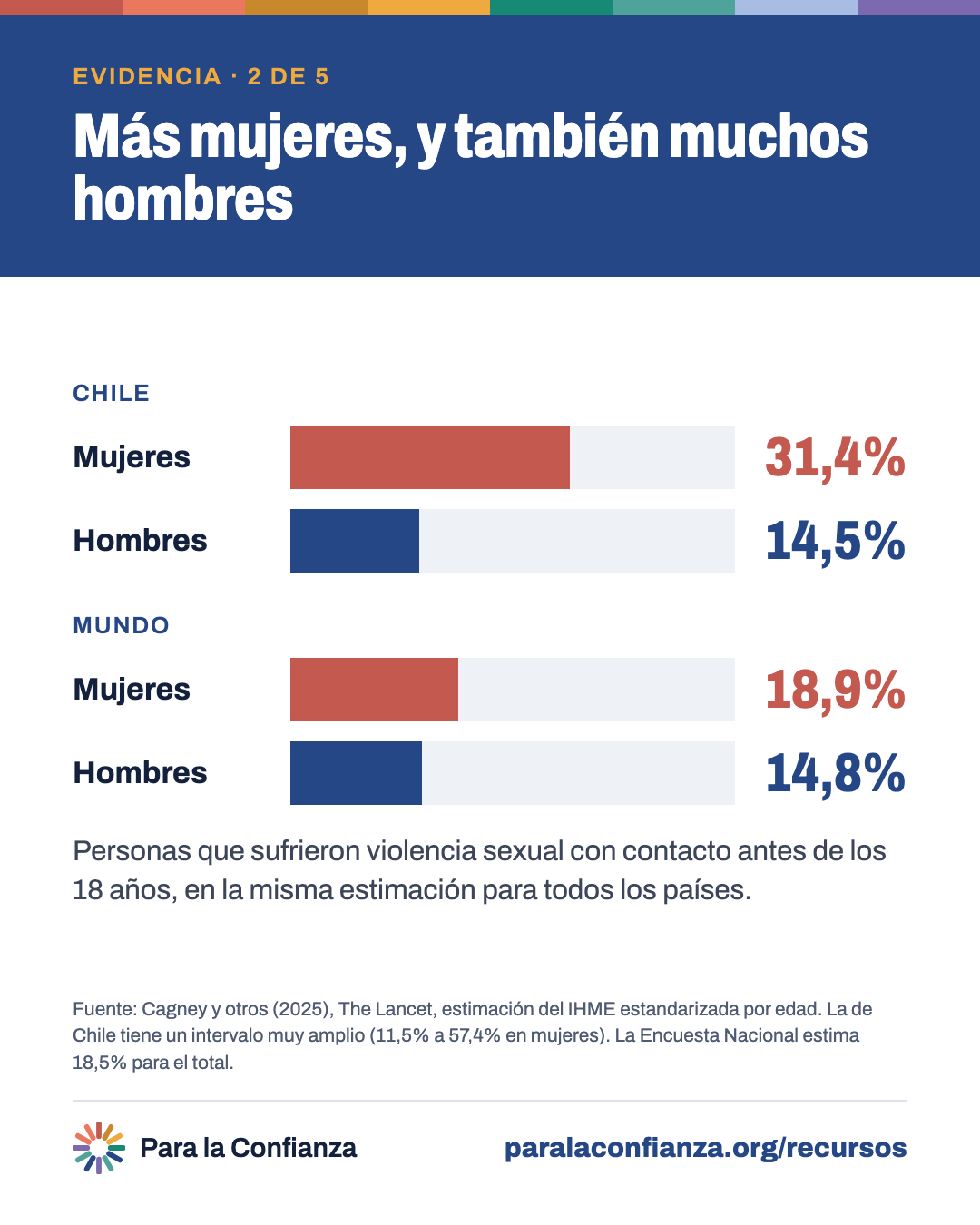
| Cagney et al. (2025), The Lancet | Model for 204 countries with 460 sources | Adults aged 20 or over | Women 18.9%, men 14.8% (contact) |
| Piolanti et al. (2025), JAMA Pediatrics | 165 national studies, 80 countries, 958,182 children and adolescents | Children and adolescents | Contact 8.7%; completed forced intercourse 6.1% |
| Ruiz-Ramos et al. (2025), Trauma, Violence, & Abuse | 28 studies, 2010–2025 | Children and adolescents | Means between 3% and 10% depending on the type of abuse |
The meta-analysis by Fang et al. (2026), the largest published, searched for studies in the six official languages of the United Nations and estimated that in 2024 alone 72.6 million girls and 60.9 million boys suffered some form of sexual violence, of whom 43.3 and 34.8 million suffered rape or sexual assault. It also found that the difference between girls and boys, although present in most regions, is smaller than reported by earlier meta-analyses. Figures obtained from children and adolescents are lower because they cover a shorter period, the past year or what has happened up to their current age: Fang et al. estimate that 6.2% of girls and 4.9% of boys suffered some form of sexual violence in the past 12 months.
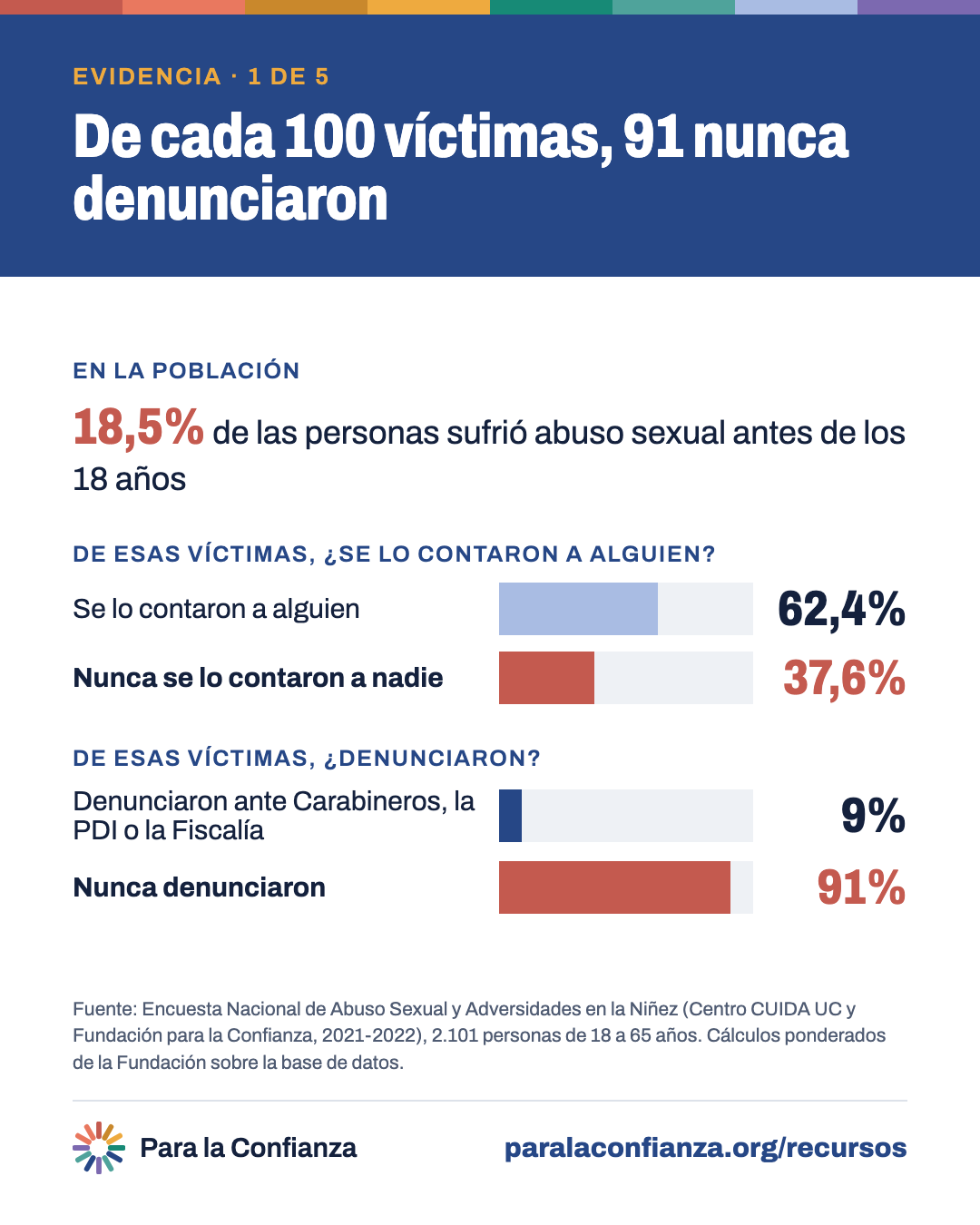
The study by Cagney et al. (2025) estimates 31.4% for women and 14.5% for men in Chile. The uncertainty interval for Chilean women is very wide, from 11.5% to 57.4%, which reflects the uncertainty of the model; the map lets you look up each country. Chile’s direct measurement, the National Survey on Sexual Abuse and Childhood Adversity, found that one in five people aged 18 to 65 had experienced it: 18.5% according to the Foundation’s weighted calculation on the dataset (details in the policy brief).
The gap between what victims report themselves and what comes to the knowledge of others has been measured for more than a decade. The meta-analysis by Stoltenborgh et al. (2011), covering 217 publications and some 10 million people, found 127 cases per 1,000 people in self-report studies and 4 per 1,000 in informant studies, such as professionals reporting the cases they know of (Child Maltreatment, 2011).
A 2026 meta-analysis measured prevalence from the perpetrator’s side: 4.5% of adults report having committed contact sexual abuse against a child, in studies with community samples that are not always representative (Whitten, Cale and Salter, 2026).
Other recent measurements:
- A 2022 meta-analysis on girls estimated that nearly one in four had suffered sexual violence (Qu et al., 2022).
- For online sexual exploitation and abuse, a global meta-analysis estimated that 8.1% of children and adolescents had experienced it in the past year (Fry et al., 2025).
- In Mexico, the National Health and Nutrition Survey recorded a child sexual abuse prevalence that rose from 2.22% in 2018 to 5.66% in 2023, among 24,179 children and adolescents aged 10 to 17 across five rounds of the survey (Rivera-Rivera et al., 2025).
- In Spain, a study by the Government Delegation against Gender Violence, carried out by the Themis Association of Women Jurists, analysed 455 court rulings issued between 2010 and 2019 and found that three in four perpetrators belonged to the victim’s family or close circle (Ministry of Equality, 2020).
Charts to share
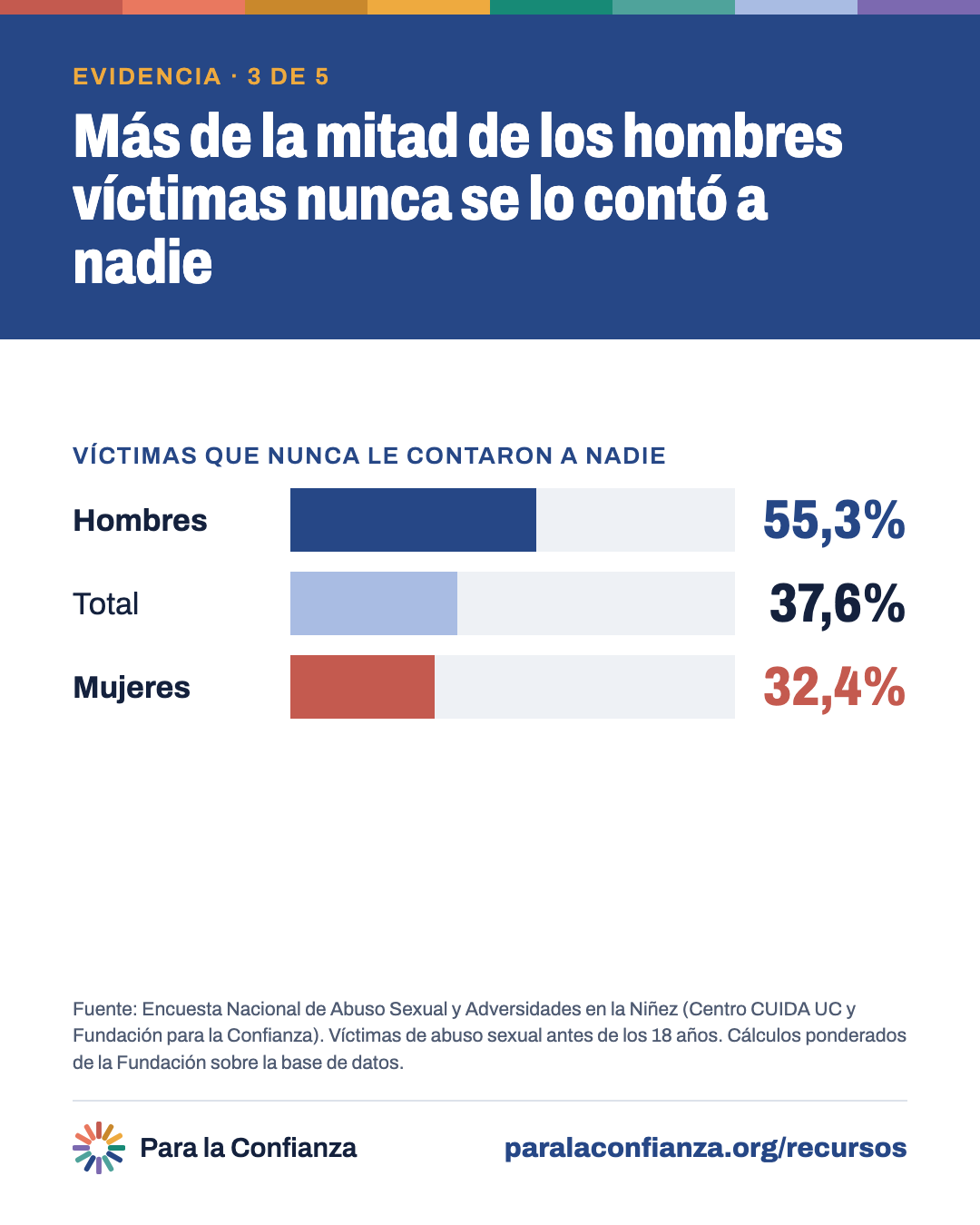
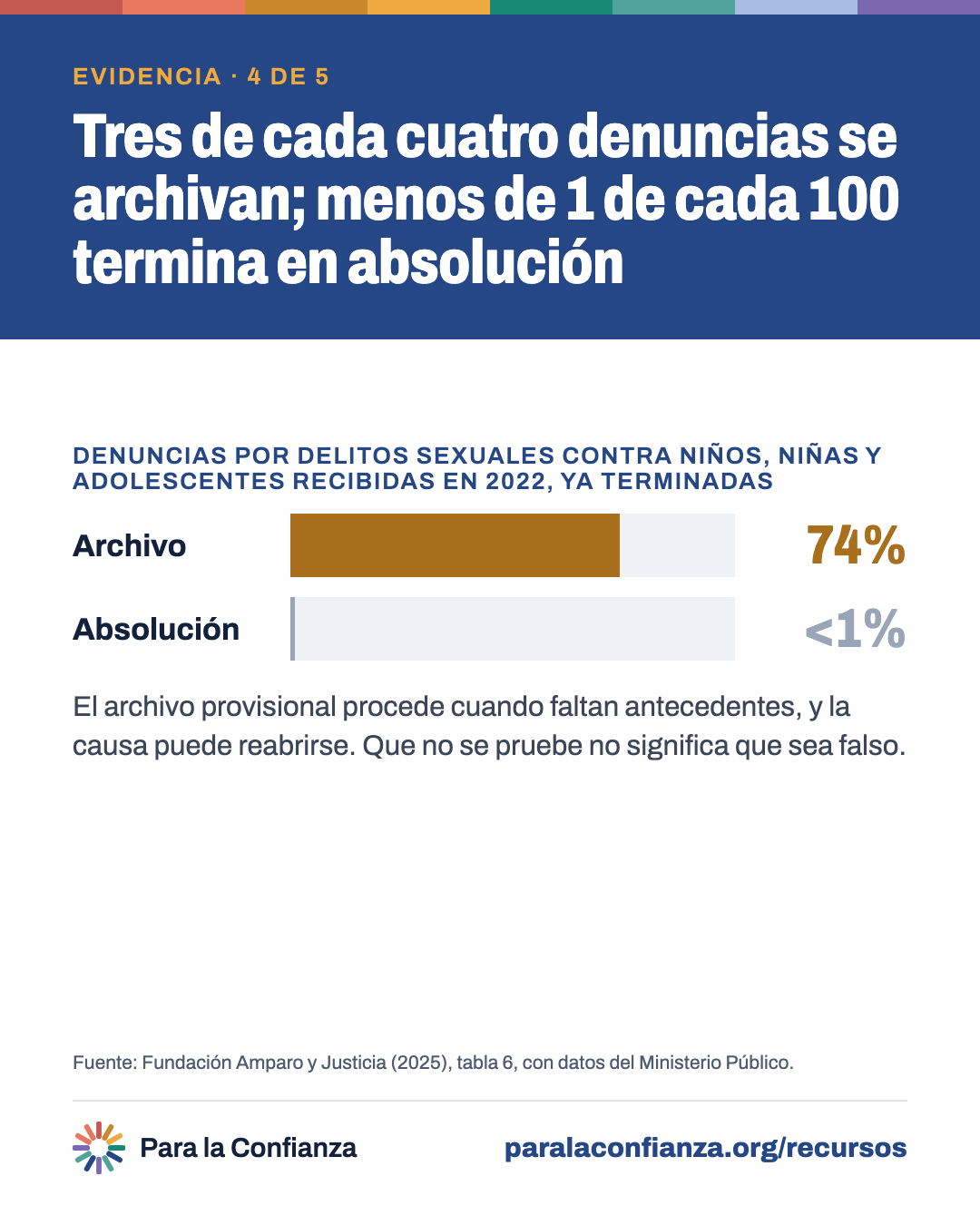
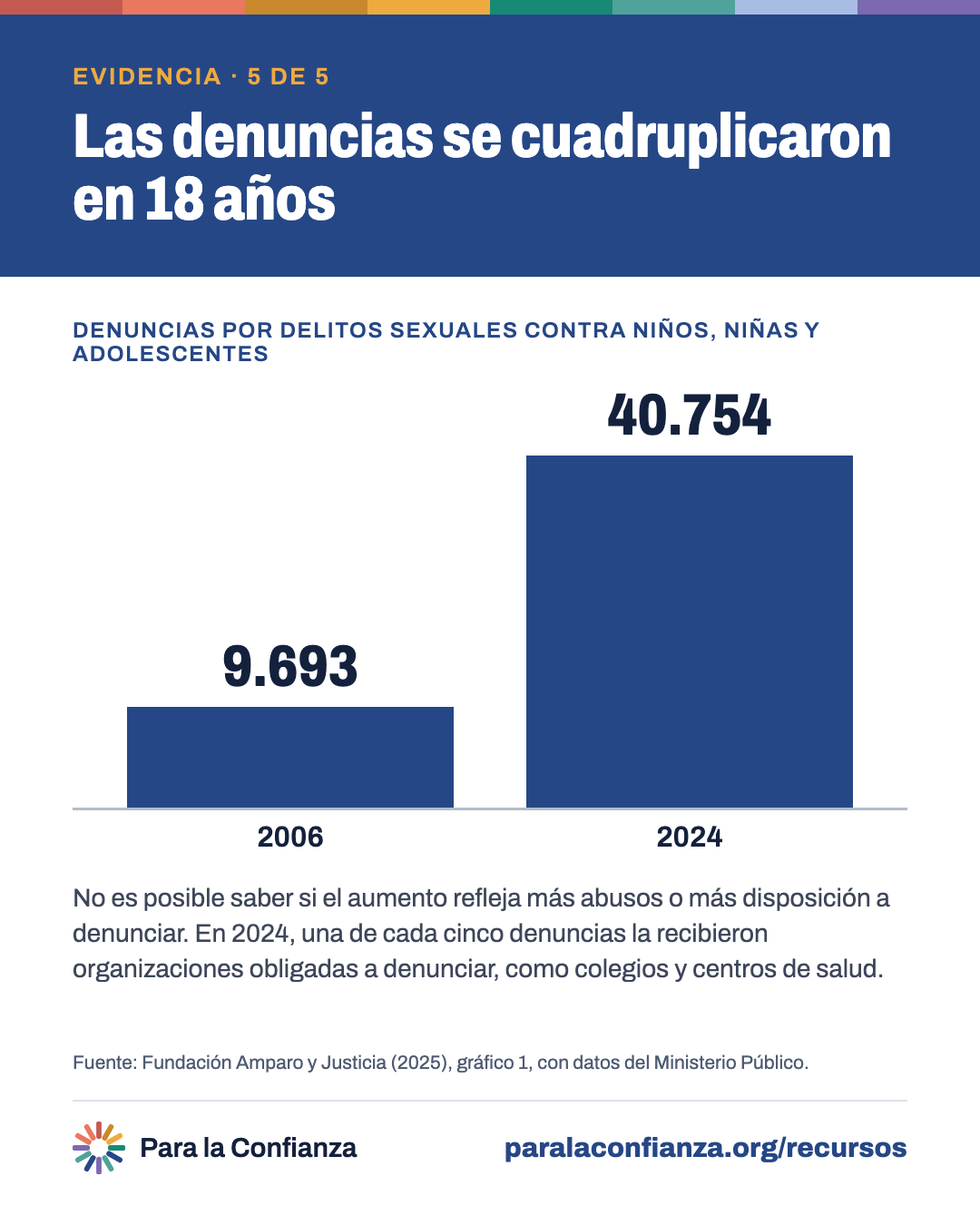
Five charts with the key figures from the evidence, formatted for Instagram and WhatsApp. Click on one to see it full size, or download it. Each chart includes its source. The charts are in Spanish.
Translation by Fundación Para la Confianza. In case of any difference, the Spanish version prevails. Spanish version.