
Resilience
Kintsugi, the Japanese technique that repairs ceramics while leaving the joins visible, and what it says about caring for people who have been victims.
The care of what has been broken
Kintsugi
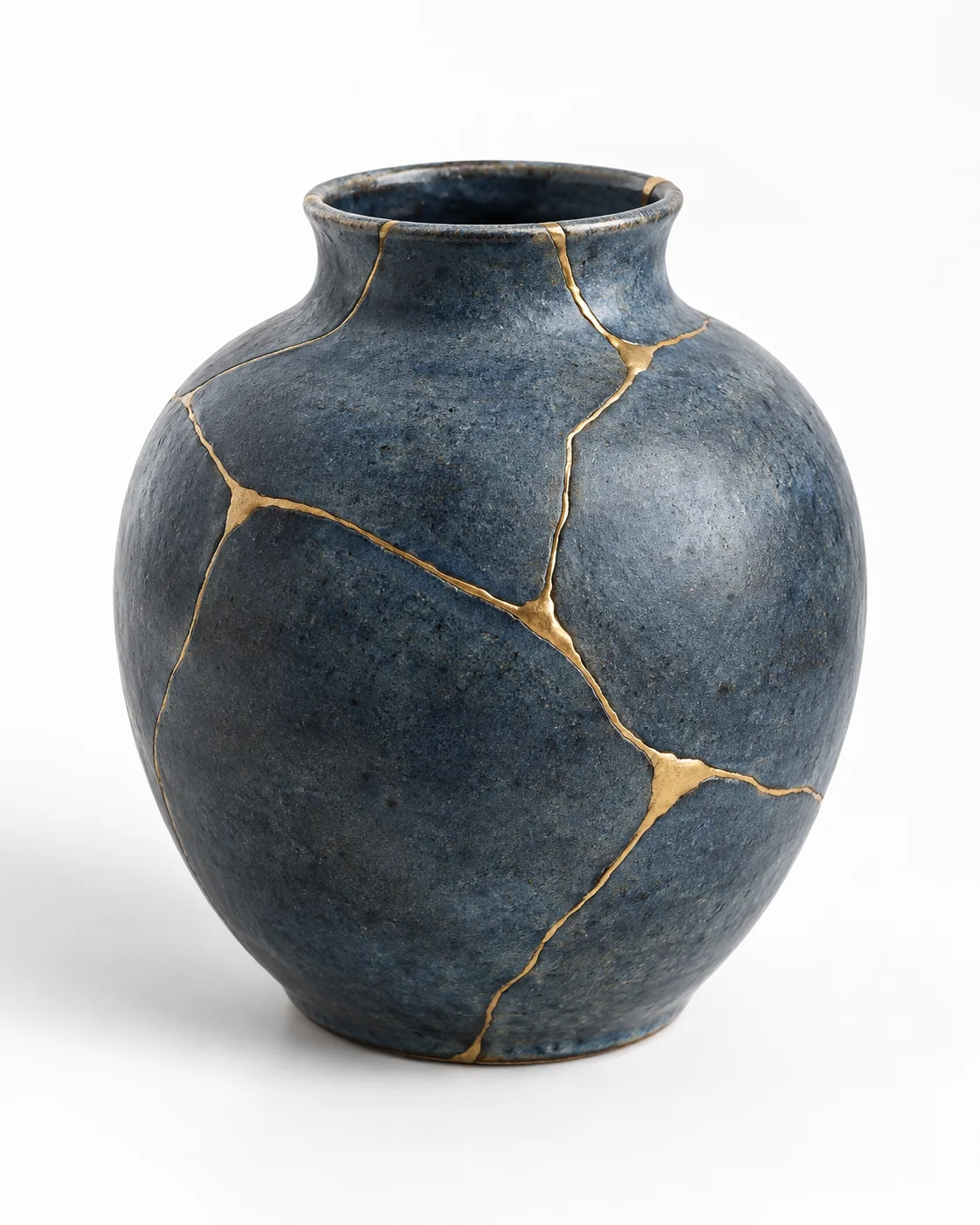
Kintsugi is a Japanese technique for repairing ceramics. The pieces are joined with a preparation based on urushi, a lacquer obtained from the sap of a tree. The finish in gold powder leaves the joins visible, and they become part of the beauty of the object.
The work requires time and attention. The edges are prepared, the fragments are joined and the lacquer is left to harden. Then the gaps are filled, the surface is smoothed and the gold finish is applied. Each piece calls for different care, depending on its shape and the parts it retains.
Care in repair
The image of the repaired vase invites us to pause over the work of the person who gathers its pieces and cares for them. There is attention to detail, patience during the waiting and a decision to keep what has value.
When thinking about resilience, this image can help us speak of the care and support we receive from other people. Accompanying someone means listening, respecting each person’s own pace and being available for what they need.
A person who has been a victim of abuse keeps their dignity and their rights. They are under no obligation to turn the harm into beauty, strength or learning. For children and adolescents, the responsibility for sustaining care lies with adults and institutions, with their participation in the decisions that affect them.
Translation by Fundación Para la Confianza. In case of any difference, the Spanish version prevails. Spanish version.