Chapter 1 · 10 Years for a World without Abuse
A different kind of trust
Chapter 1. José Andrés Murillo explains lucid trust as against blind trust and total distrust; the Board of Directors says why abuse must be fought, and a timeline goes through the milestones from 2010 to 2020.
“A different kind of trust”
By: José Andrés Murillo, Executive Director, Fundación para la Confianza.
2010 was a complex year. Something broke and something was set free. The events that marked this rupture and liberation, and that brought about irreversible changes, began, symbolically, with the earthquake of 27 February. It was one of the most intense earthquakes recorded in human history. Chile is a seismic country, so we know something about that. Like social, political and relational upheavals, earthquakes do not come out of nowhere; they are manifestations of an underground conflict that accumulates conflictual energy until it can no longer hold and it bursts. A conflict of tectonic plates that struggle, one to move and the other to stop it, which can go on for years accumulating energy until it is expressed violently in an earthquake that can be very destructive.
In February of that year the earthquake happened. And in April the Karadima case broke publicly. It was like a small hole in an age-old dam. It was not just a scandal about clerical sexual abuse but the symbol of a new era, in which it was possible to question what, until very recently, one simply had to accept blindly and silently. The case, which we had reported, was in the news headlines for years. Its exposure laid bare the conflictive encounter between two eras: one that forces people to accept abuses of power in silence, because power gives security and order, and another era that dares to question from uncertainty and freedom.
Ten years later, thousands of cases of clerical abuse have been reported. Local and global networks and associations of victims fight day after day for the right to justice and reparation. And also for prevention. Even the Vatican itself has, on some occasions, become part of these reports.
A decade ago, it was not only in the Church that abuse was beginning to be discovered. Sexual abuse and also abuse of power, corruption, influence peddling and mistreatment had taken over almost every corner of society. Normalised abuse was beginning to sound dissonant, to make noise, to bother people. That same year, 2010, environmental protests began in Chile against mega investment projects to produce electricity, which would destroy various ecosystems and accelerate climate change.
Once again, two cultures were clashing: one that sought to exploit the environment at any cost and another that was becoming aware of the dangers of this exploitation. It was not long before other cases of corruption in Chile came to light. Collusion between large companies and pharmacies, harming consumers, the market and trust itself. The illegal financing of politicians was another form of collusion of power, of corruption, of betraying citizens and destroying trust.
Social and institutional trust indices in Chile are, today, dramatically low, and they speak not of a weak capacity to trust but of the weak trustworthiness of institutions. In that sense, the so-called crisis of trust in Chile is not one of the capacity to trust but of the capacity to be trustworthy. It would be a mistake, then, to speak of a crisis of trust in our country. A trust capable of distrusting untrustworthy institutions is not in crisis; it is healthy. I will come back to this.
As one of the people who reported the abuse in the Church, I was part of the collapse of trust in it. It is right to distrust institutions when they are untrustworthy, but it is also easy to start on an endless escalation of distrust that ends in total social fragmentation. The challenge I felt, even on the philosophical level, did not arise from people distrusting, but from the search for a different kind of trust. I called it, in a small book I published in 2012, lucid trust (Uqbar, 2012).
Towards lucid trust
Trust is a fundamental energy that makes possible the existence of any social organisation, from the smallest and most basic, such as a family, a couple, a friendship, a work team or a neighbourhood association, to a country and a group of countries. Without trust, said the philosopher Georg Simmel, a society disintegrates.
The task of defining it is difficult, but we know that trust is a fragile and indispensable symbolic fabric that makes human relationships possible. We need human relationships in order to feel secure, but those same relationships are fragile and dangerous, and they cause insecurity. That is where trust comes into play, and it can become a blind trust, which is sheer blindness meant to eliminate that fragility and to feel secure, or total distrust. But is it possible to overcome this apparent dilemma?
Trust cannot be reduced to a rational act, that of trusting or not, but rather consists in building an ethical, social and affective space that makes human flourishing in community possible.
From this ethical perspective, then, trust is not so much about relationships of trust as about building a climate, a trustworthy context, out of conditions of trustworthiness. We will say, rather, conditions of lucidity.
Lucid trust as a critical ethics
From an ethical approach, trust is lucid when it allows human relationships to unfold in a healthy way. Lucidity is the overcoming of naivety in relationships, the naivety that gets trapped in the binary dilemma of blind trust or total distrust. Indeed, the opposite of trust, in terms of lucid trust, is not only distrust but also blind trust. Lucid trust involves a critical decision to question the trustworthiness of the context and of the relationships in that context. Although it is generally a pre-reflective activity, it is essential to begin exploring the elements of assessment that make it possible to determine whether or not trust is advisable. That is, whether it is advisable to expose one’s own vulnerability in a given context, or not, or to distrust.
Trust is always within the tension of human being-with. It is the only possible way to face the dilemma and conflict of human coexistence, the dilemma of not being able to be without others, not being able to exist except through others, and being able to be harmed by those through whom we exist as humans. We depend on the bond, and it is this very bond that can destroy us when it is abusive1.
Among the models of trust that may be present in human contexts, some are healthier, that is, they allow people to develop and integrate within this shared bond, and others hinder or destroy it. These are pathological manifestations of trust, that is, of this conflictual balance between protecting oneself from others and bonding with them, depending on them. I have called the pathological manifestations blind, or narcissistic, trust and total, or paranoid, distrust.
Blind trust
Social narcissism. It normalises power relations without questioning them; it is doubly blind, because it does not see that it does not see.
Lucid trust
It seeks a context in which trust makes sense and social conflicts are possible and constructive.
Total distrust
Paranoia. Suspicion is the norm and everything enters a haze of threat.
Blind trust, or social narcissism
Blind trust represents a human climate in which a person or a group of people take up a position that normalises power relations without questioning them, leaving only the blind acceptance of structures, their configuration and their distributions of power.
In a context of blind trust, asymmetric structures of symbolic power are seen as natural, especially when they are actually abusive, as in the case of machismo, racism, adultcentrism, classism and so on, in which those who must accept, obey or be despised are identified, so as to secure an established order that organises society.
Blind trust carries with it a distrust —also blind— of those who raise any kind of question. People prefer to opt for a social security that distributes the roles of power and obedience clearly, by tradition and by force. The search for community meaning is replaced by stability, tradition, security, the system from which roles and power dynamics are distributed. It is for these reasons that people trust blindly.
Blind trust is doubly blind, because it does not see that it does not see. It considers that its construction of structures and distributions of power is the true and natural one, and that there is no need to question it. Questioning is seen as a threat rather than as an opportunity for improvement, or for seeing what was not seen before. Blind trust is built and sheltered in the desire for the security that the status quo provides.
In a culture of blind trust, it is more threatening to speak of abuse than to commit abuse or be a victim of it. Abuse is experienced through denial and, at most, is considered a price to pay for stability and apparent security.
When the reports of sexual abuse in the Church began, what we saw was a corporate defence by many people and sectors. More conservative sectors, precisely because they needed to “conserve” and cling to structures that had given them security until then. We were attacked as enemies of the Church, leftists, politicians, and in other ways that tried to discredit us. I saw a typical corporatist reaction of blind trust. Some people told us that we should forgive instead of questioning so much. But we wanted to question the structure, because it was the blind structure, doubly blind, that made the abuse possible, normalised it and also led to the cover-up, as a natural reaction.
Total distrust
On the other hand, there were very violent reactions against every structure, since it was considered abusive simply for being a structure. These responses arose against all religion, authority, family, power. So I came to identify another kind of reaction that reflected another kind of cultural context, that of generalised distrust, total distrust, as blind as blind trust. A reaction that was also pathological, but arising not from narcissism but from paranoia.
In the climate of generalised distrust, suspicion is the norm. Generalised suspicion of all people, positions and structures. Generalised distrust, once it stabilises, then comes to be a safe place from which to look at and judge the world.
It is the security of not opening up, the cynical negative relationship with the world that considers it untrustworthy.
Paranoia prevents the creation of the relationships of trust needed to establish a support system. What generalised distrust seeks is not to restore trust, nor to create a platform or organisation that protects, but endless persecution. The desire for revenge and for endless persecution replaces the need for justice or for establishing common ground. This distrust makes it impossible to distinguish properly what is truly threatening and what is not. Everything enters a haze of threat, the persecutory darkness that never ends.
Lucid trust
To trust involves a risk, but not to trust is a failure. Lucid trust is not merely a conditional trust, but the search for a context in which trust makes sense, where social relationships and conflicts are possible and constructive. It is the search for and creation of spaces of social health which, like contemporary definitions of medical health, do not refer to the absence of illness but to the promotion of comprehensive well-being.
To trust involves a risk, but not to trust is a failure.
The main dimensions in which a climate or context shows whether it is in blind trust, total distrust or lucid trust are justice, mutual recognition, communication, critical thinking, and the handling of power, or leadership. Justice, as the fundamental normative agreements for building a space that is common, with clear limits and rights respected. In a context of blind trust, justice is replaced by the normalisation of injustice, and in total distrust it is replaced by revenge.
Mutual recognition is also a condition of lucid trust. To recognise is to understand and validate, to make visible the contribution that each person represents in the context. In a climate of blind trust, that recognition is replaced by its opposite, by invisibility, by each person being replaceable. Nobody really matters, only the structure and its security. In a context of total distrust, recognition is replaced by active contempt.
Communication is a dimension of lucid trust that shows what is common in the space that is shared. There is a real will to share that world, ideas, speech, in a reasonable and open way. In a context of blind trust, communication shows itself evasively. People prefer not to talk about certain things that make them uncomfortable, that call things into question. That is why it is better to speak in clichés or commonplaces, without saying things directly. In a context of total trust, communication is pure aggressiveness with no sense of building anything. Contempt and aggression.
Critical thinking is key to lucid trust, because it makes it possible to manage fragility in a reasonable way. If a context can be questioned, it becomes more trustworthy, not less. By contrast, in a context of blind trust, thinking is rather dogmatic, a kind of unquestionable magical thinking. In an environment of total distrust, thinking is also dogmatic, from the absence of structure, and it is persecutory and paranoid.
Finally, leadership, the handling of power and authority, is a fundamental dimension for establishing a context of lucid trust. It requires leadership to be open to empowering those who are in that context, starting from their own reality and in the direction of the context’s purpose. Blind trust and total distrust can be abusive, totalitarian, authoritarian or chaotic. They fail to generate leadership with purpose, and therefore destroy their capacity for lucidity.
-
Justice
- Lucid
- Normative agreements for a common space, with clear limits and rights respected
- Blind
- Normalisation of injustice
- Total distrust
- Revenge
-
Mutual recognition
- Lucid
- Understanding and validating; making visible each person’s contribution
- Blind
- Invisibility: each person is replaceable
- Total distrust
- Active contempt
-
Communication
- Lucid
- A real will to share the world, ideas and speech
- Blind
- Evasive: clichés and commonplaces
- Total distrust
- Aggressiveness with no sense of building
-
Critical thinking
- Lucid
- Manages fragility in a reasonable way
- Blind
- Dogmatic: unquestionable magical thinking
- Total distrust
- Dogmatic: persecutory and paranoid
-
Leadership
- Lucid
- Open to empowering those who are in that context
- Blind trust and total distrust
- Can be abusive, totalitarian, authoritarian or chaotic
These are the spaces that we, as the Fundación para la Confianza, have decided to promote, assess, build and rebuild. Spaces of lucid trust that allow the comprehensive development of people, especially of children and adolescents, whose rights must be protected so that they can unfold the trust they deserve. Their right is our ethical obligation.
1 Human identity, following the analyses of child psychoanalysis carried out by Donald Winnicott, which are also at the basis of Honneth’s theory of recognition, is built from interaction with another, affectively significant person in what he calls care. In that interaction, in the encounter with others, trust plays a fundamental role. See especially Winnicott, “La integración del yo en el desarrollo del niño”, 1962, published in Los procesos de maduración y el ambiente facilitador, Paidós, 1993. And Axel Honneth, La lucha por el reconocimiento, ed. Crítica, 1997.
Why fight abuse?
By: Board of Directors, Fundación para la Confianza.
“Pain is inseparable from the experience of life for each person; it is part of our human condition and of our growth. There are, however, pains that have no justification, that are absurdly banal and deeply harmful. Of these, perhaps the most intolerable is the pain caused to people who are victims of others with more power, and very especially to children. I have been a very close witness of this unjustifiable experience. This has driven me to look for ways to work with people who are committed to supporting victims of abuse, and to achieve real progress so that this situation ceases to exist, wherever it occurs.”
Octavio Vergara
“There can be two answers, the easy one and the hard one.
Because I have children. And I don’t want anything bad to happen to them. The easy one.
But there is something more intimate inside you. A fear of facing the reality we didn’t want to see. A duty of a human being. An awakening. A brick to the head that shakes everything and moves you. Because to move is to disturb, to shake someone hard. And for people like me, who have built our road map around making the rich richer and drawing a salary, this doesn’t fulfil us, it doesn’t make us happy.
There are infinite ways to abuse. You abuse trust, truth, lies, the one you love and the one you hate. But children are not to be abused. And as a Foundation we will die, if necessary, in the fight against abuse.”
Sebastián Arteaga
“How could we not fight it? How can we remain indifferent to the horror lived by so many people who suffer abuse? How can we live in peace looking the other way, feeling that this is a problem that does not concern or involve us? How can we not feel called to do something, even if it is only what is within our reach? Every survivor of abuse is moved by the wish that no one else should live what he or she has suffered. At the Fundación para la Confianza we chose to join their fight. So that abuse never happens again; so that all of us are respected in our dignity.”
Josefina Martínez
“Every person has the right to be respected, valued and cared for by the people close to them, by the institutions they take part in throughout their life and by the whole society that takes them in.
Harming that life with abuse is one of the most serious things that can happen, because it destroys the person’s foundation of trust: trust in their surroundings, in their relationships with others, even in themselves.
The Fundación para la Confianza seeks to prevent all abuse, to raise awareness of the importance of prevention, to restore what has been damaged and, above all, to give back trust to those whose rights have been violated.”
María Luisa Andueza
“Because it is a plague that kills. Abuse in all its forms attacks our most intimate value: our own individuality, destroying our trust, our strengths, and preventing us from living in peace. Like an invisible plague, we live with abuse every day and bear it almost unconsciously. We cannot go on like this. Fighting abuse today is the challenge that falls to us: to wake up and act to protect our limits and care for others. Today we fight abuse because we know the level of harm it causes, because we believe in a better life without it, and because we are convinced that by acting together we can be a sounding board that awakens other wills. We report abuse, we promote care and we protect children so as to leave them a better world.”
Antonia Pellegrini
“I believe it is essential in a society to open up these issues, to talk about these issues, because this happens, it always happens and it keeps happening, it happens today and it will keep happening tomorrow. The powerful mission that the Fundación para la Confianza has carried out has to do with making visible a problem we have in our society, with the importance of getting cases of abuse reported and of seeing justice done so as to curb this scourge, which is tremendously painful, complex and extremely hard. So I believe this is the great perspective the Foundation has set itself in all the years it has been pursuing this cause.
Thanks to the work the Foundation has done, it has been possible for this subject to be put into words within families, by people who had been closed off for years about the abuse they suffered.
I believe this mission gives value to what it means to talk about these issues and to pursue justice in cases of abuse.”
Katherine Salosny
“I believe abuse has to be fought because it causes tremendous harm and turns normal lives into hells. The good thing about what we do at the Foundation is that we fight abuse with hope and manage, like a Pandora’s box, to understand that one can get out and recover. I think abuse is like an equivalent of torture, if not worse. It is a very great human rights violation, because of the devastating harm it causes.”
Juan Pablo Hermosilla
“For me, from my own experience, fighting abuse terrified me, but seeing the liberation it brings to people’s souls and lives, and having been one of the first to make it public, I feel I would do it a thousand times over if I can help people get out of the anguish I lived through.”
Juan Carlos Cruz
“Because otherwise life loses its meaning. Life without freedom, without the capacity for wonder that freedom gives, has no meaning.”
James Hamilton
Ten years of trust
A timeline of the milestones that marked our history.
- 2010
- May The idea of helping other people who have been victims of child sexual abuse is born, and the mission of the Fundación para la Confianza begins to take shape.
- December Para la Confianza is constituted as a foundation. A first office is opened in premises owned by the Instituto Catequístico (Catechetical Institute) in Providencia. The Foundation begins to guide its first victims.
- 2011
- December The first Mutual Support Group (GAMU) for victims of child sexual abuse is held.
- 2012
- April The first Diploma programme is taught to professionals who work with victims of child sexual abuse (from April to August, for a total of 101 hours).
- August The Fundación para la Confianza and other organisations create the “Bloque por la Infancia” (Bloc for Childhood), to work together for the rights of children and adolescents.
- September The Foundation leads, together with UNICEF, the campaign “Si tocan un niño, a mí me toca” (“If they touch a child, they touch me”).
- 2013
- March The office moves to the centre of Santiago, on Avenida Libertador Bernardo O’Higgins, opposite the Ministry of Education.
- 2014
- January The First Chilean Congress on Child Maltreatment and Sexual Abuse is held.
- December The Foundation joins the Civil Society Council of SENAME (Servicio Nacional de Menores, Chile’s national child protection service at the time).
- 2015
- February The office moves to the district of Las Condes, and the Foundation takes part in the Presidential Advisory Council against Conflicts of Interest, Influence Peddling and Corruption (Engel Commission).
- 2016
- March First pilot of the “Alianzas para la Confianza” (Alliances for Trust), a project that seeks to build, together with school communities, their protocols for prevention and for action in cases of abuse.
- December The Foundation is awarded the project to update the good-treatment (buen trato) policy of the National Kindergarten Board (JUNJI) from the lucid trust approach.
- 2017
- March The “Yo confío” (“I trust”) campaign is launched to raise awareness of and prevent child sexual abuse.
- April The office moves to a space dedicated exclusively to the Foundation in Providencia.
- 2018
- January Pope Francis visits Chile and the Foundation holds an International Seminar on abuse in ecclesiastical contexts.
- January Together with other people and organisations, ECA Ending Clergy Abuse is created, a global organisation of human rights activists focused on childhood and on victims of clerical abuse, especially those who are children.
- May The “Observatorio para la Confianza” (Observatory for Trust) project begins, with the aim of researching and influencing public policy related to childhood, especially children and adolescents under State protection.
- September In partnership with the Fundación Cultural de Providencia, the exhibition “Luces del Silencio” (“Lights of Silence”) is held.
- November Together with the Comunidad de Organizaciones Solidarias and Ciudadanía Inteligente, “Vigilantes por la Infancia” (“Watchers for Childhood”) is launched.
- December The results of the study “Prevalence of child sexual abuse in the Santiago Metropolitan Region” (in Spanish) are released.
- 2019
- January Some 500 people take part in the Chilean Congress on child maltreatment and sexual abuse organised with the NGO Paicabí.
- March The Court of Appeals rules against the Chilean Catholic Church for covering up the abuse committed by former priest Karadima and orders it to pay compensation to José Andrés Murillo, Juan Carlos Cruz and James Hamilton.
- April The course “Child sexual abuse as a psychosocial phenomenon” is given to officials attached to the Judicial Academy of Chile.
- June Línea Libre (the Foundation’s helpline for children and young people) reopens, a channel of psychological support for children and adolescents.
- July The law removing the statute of limitations for sexual offences against children and adolescents is enacted, a process in which the Foundation took part. The #NiUnDíaMás (“Not one more day”) membership campaign is launched. Participation in a Seminar on child sexual abuse at the Universidad Pontificia de México.
- August Together with the Pontificia Universidad Católica de Chile, the CUIDA Centre (Centre for Research on Abuse and Early Adversity) is created.
- October Participation in the Seminar “Sexual abuse in clerical contexts” in El Salvador. Victims are accompanied in filing the first report.
- November The Ministry of National Assets provides a building in the Barrio Lastarria so that the Foundation can continue operating.
- December The Foundation begins to provide psychological guidance to victims of the social uprising, with the support of the National Youth Institute (INJUV).
- 2020
- August Two new Diploma programmes begin: “Socio-emotional well-being and lucidity in teaching practice” and “Ethical accompaniment in residential care settings”.
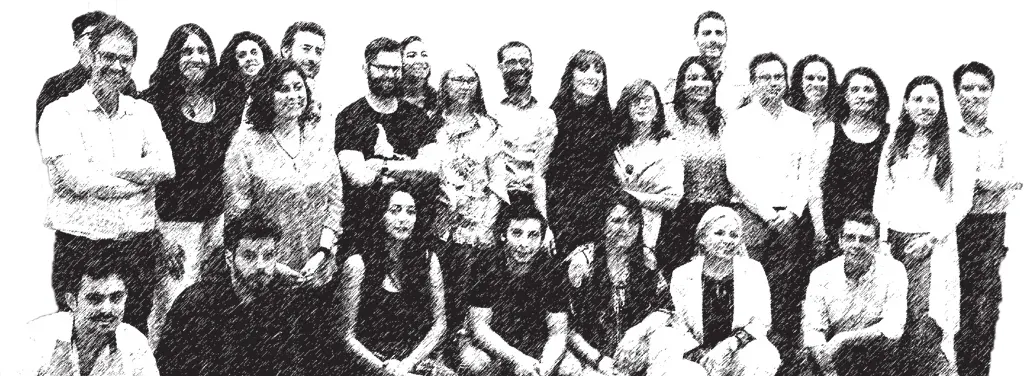
About this edition. Web version of the book 10 Years for a World without Abuse (10 años por un mundo sin abuso), published in Spanish as a PDF by the Fundación para la Confianza in 2021 (first printed edition of 500 copies, Ograma Impresores; ISBN 978-956-402-822-4). Director: José Andrés Murillo. General coordination: Nicole Del Río. Research and writing: Benjamín Gálvez. Art direction and design: Cristhian Sotomayor. Illustrations: Jesu Villa and Cristhian Sotomayor. Editing: Natalie Sève. In this version, errata have been corrected and graphics summarising the content have been added; the illustrations of the people who give testimony are not reproduced. Figures, positions and legal references are as of the date of the book. Download the original PDF (in Spanish)
Translation by Fundación Para la Confianza. In case of any difference, the Spanish version prevails. Spanish version.